Hand Tool Safety & Seasonal Inspections
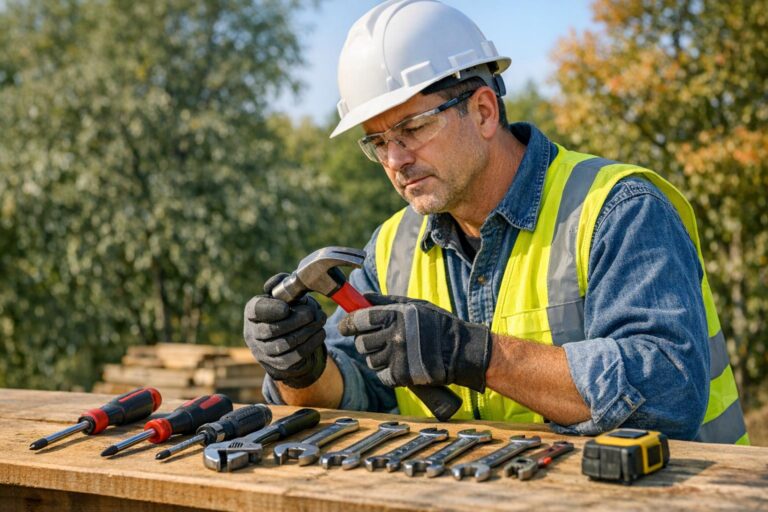
Hand tools are often seen as low‑risk compared to power tools or heavy machinery, but they are a major source of workplace injuries. Cuts, punctures, eye injuries and repetitive strain can all result from…
Toolbox Talks topic
Toolbox talks on using equipment and tools safely: grinders, lathes, conveyors, ladders, scaffolding, welding and cutting, hand tools, trucking and tool storage. Pair them with operator training so every crew member knows the hazards of the equipment they run.

Hand tools are often seen as low‑risk compared to power tools or heavy machinery, but they are a major source of workplace injuries. Cuts, punctures, eye injuries and repetitive strain can all result from…

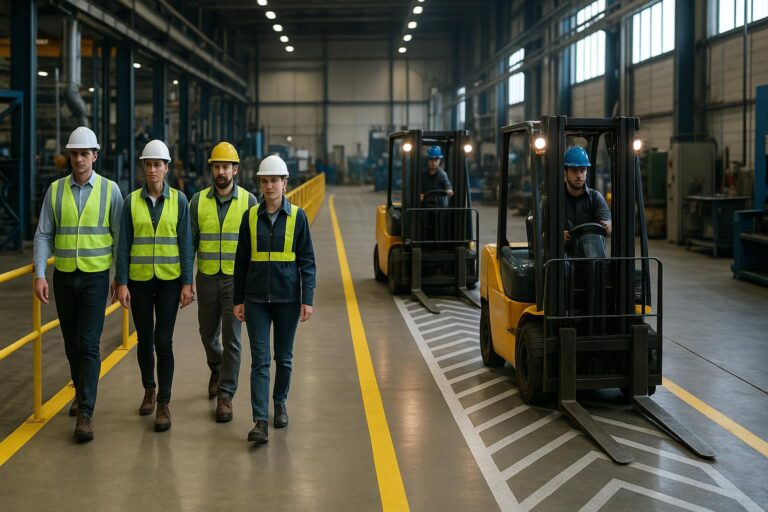
Every worksite where people move around the same areas as mobile equipment carries a serious risk of strikes, crush injuries and fatalities.
Read article →
Conducting Personal Protective Equipment Assessments: A Step-by-Step Guide for Workplace Safety Personal Protective Equipment (PPE) is a critical component of workplace safety.
Read article →
Ladders are indispensable tools across various industries, but their misuse can lead to serious injuries or fatalities. According to the U.S. Bureau
Read article →
Proper storage of tools and equipment is essential for maintaining a safe and efficient workplace. Improper stacking, unsecured heavy tools, and disorganized
Read article →
Electrical safety in the workplace has been revolutionized by advanced technologies like smart circuit breakers and Ground Fault Circuit Interrupters (GFCIs). These
Read article →
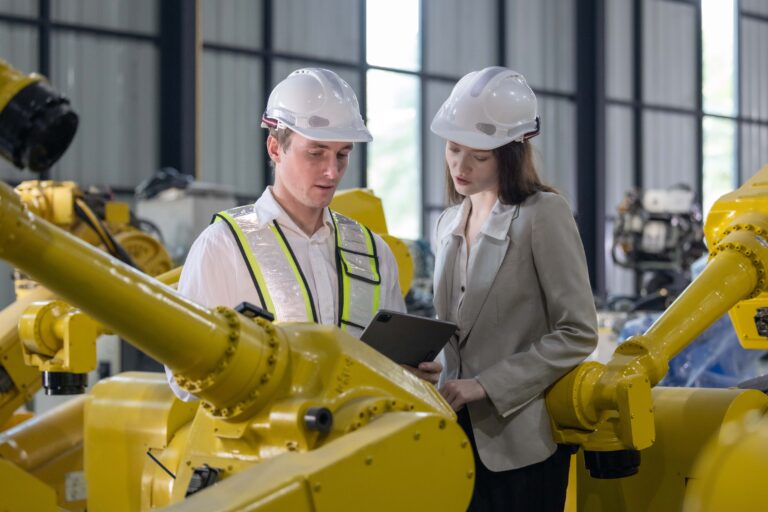
Enhancing Workplace Safety In any industrial setting, machinery is the backbone of operations, driving productivity and ensuring tasks are completed efficiently. However,
Read article →
In the fast-paced world of manufacturing, the safety and efficiency of operations often hinge on the skill and knowledge of assembler machine
Read article →
Forklifts are indispensable in various industries, aiding in the efficient transport of materials. However, their operation also poses significant risks not only
Read article →
Introduction Overhead cranes are a critical component in various industries, including construction, manufacturing, and transportation. They are used to lift and move
Read article →Quick answers
Short answers for supervisors and safety leads.
OSHA requires an evaluation of each powered industrial truck operator’s performance at least once every three years (29 CFR 1910.178(l)(4)(iii)). Refresher training is also required after unsafe operation, an accident or near miss, a poor evaluation, a change to a different type of truck, or a change in workplace conditions (1910.178(l)(4)(ii)).
In construction, a portable ladder used to reach an upper landing must have its side rails extend at least 3 feet above that surface. If the ladder is too short, it must be secured at the top to a rigid support and a grab rail or similar handhold must be provided (29 CFR 1926.1053(b)(1)).
Keep the work rest no more than 1/8 inch from the wheel and the gap at the top of the tongue guard no more than 1/4 inch, and readjust both as the wheel wears. Never adjust them while the wheel is moving (29 CFR 1910.215(a)(4) and (b)(9)).
Service
Written programs, inspections and recordkeeping managed for you by our safety team.
Learn more →Service
Find hazards and paperwork gaps before an inspector does, with a written report and fix list.
Learn more →Everyone goes home safe... every day!
Book a mock OSHA audit or talk to a safety expert about your programs, citations and training.