UV rays are a form of radiation from the sun that can damage skin cells even on cool or cloudy days. You cannot see or feel UV radiation, which is why many workers underestimate the risk. A sunburn is not just a short‑term discomfort; it is evidence of cellular damage that can accumulate over years of outdoor work.
The U.S. Centers for Disease Control and Prevention (CDC) notes that most skin cancers are caused by too much exposure to UV light, including sunlight and artificial sources like tanning beds. Skin cancer is the most common cancer in the United States. According to the American Cancer Society, about 5.5 million cases of basal cell and squamous cell skin cancers are diagnosed each year, and melanoma cases have been rising for decades. These statistics matter on the jobsite because outdoor workers receive significantly higher lifetime UV doses than the general population.
Short‑Term Health Effects of UV Exposure
Unchecked UV exposure creates several immediate risks on site:
- Painful sunburn that can limit range of motion and concentration
- Heat exhaustion and heat stroke when sun exposure combines with high temperatures and heavy PPE
- Eye irritation or “snow blindness” in environments with reflective surfaces like concrete, metal, or water
These conditions can reduce alertness, slow reaction time, and increase the chance of errors, near‑misses, and recordable incidents. A worker struggling with severe sunburn or heat stress is less likely to climb, drive, rig loads, or operate equipment safely.
Long‑Term Health Effects for Outdoor Workers
For tradespeople, utility crews, landscapers, road workers, and other outdoor professionals, the long‑term risks are even more concerning:
- Skin cancer (basal cell carcinoma, squamous cell carcinoma, melanoma)
- Premature skin aging (wrinkles, leathery skin, dark spots)
- Eye damage, including cataracts and other vision‑impairing conditions
The World Health Organization’s International Agency for Research on Cancer classifies solar radiation as a Group 1 carcinogen, the same category as tobacco smoke and asbestos. That level of risk justifies a systematic, company‑wide approach to sun safety, not just occasional sunscreen use.
Recognizing Higher‑Risk Conditions on the Job
Sun safety planning should factor in time of day, season, and site conditions. UV intensity is usually highest between 10 a.m. and 4 p.m. local time. Risk increases when:
- Work is performed at higher altitudes
- Surfaces like water, sand, concrete, or metal reflect sunlight
- Skies are partly cloudy (UV can be scattered and still intense)
- There is a light breeze or lower air temperature that hides how strong the sun really is
Supervisors and safety leads should review the UV index for the day as part of the pre‑task plan and morning toolbox talk, just like they review weather and wind conditions.
Engineering and Administrative Controls for Sun Safety
Apply the same hierarchy of controls used for other workplace hazards. Start with engineering and administrative controls before relying only on personal protective equipment (PPE):
- Provide shade structures where feasible, such as canopies, tents, or covered break areas
- Schedule high‑exposure tasks (roofing, steel erection, paving, landscaping) earlier in the morning or later in the afternoon when UV levels are lower
- Rotate crews so no single worker absorbs the highest exposure all shift
- Require shaded, cooled rest breaks and hydration breaks as part of your heat and sun policy
Document these expectations in your safety plan and job hazard analyses (JHAs), and review them during pre‑task planning.
Sun‑Protective PPE and Clothing
When engineering and administrative controls are in place, reinforce them with effective PPE. For outdoor work, this includes:
- Long‑sleeved, lightweight, breathable shirts and long pants with a high ultraviolet protection factor (UPF) rating
- Wide‑brim hard hat brims or compatible neck shades to protect ears and neck
- Safety glasses with side shields that block 99–100% of UVA and UVB rays
- Neck gaiters or bandanas made from moisture‑wicking, sun‑protective fabric
Clothing is your first line of defense; sunscreen protects the exposed areas clothing cannot cover. Make sun‑protective clothing part of your standard issue PPE list, not an optional add‑on.
Choosing and Using Sunscreen Correctly
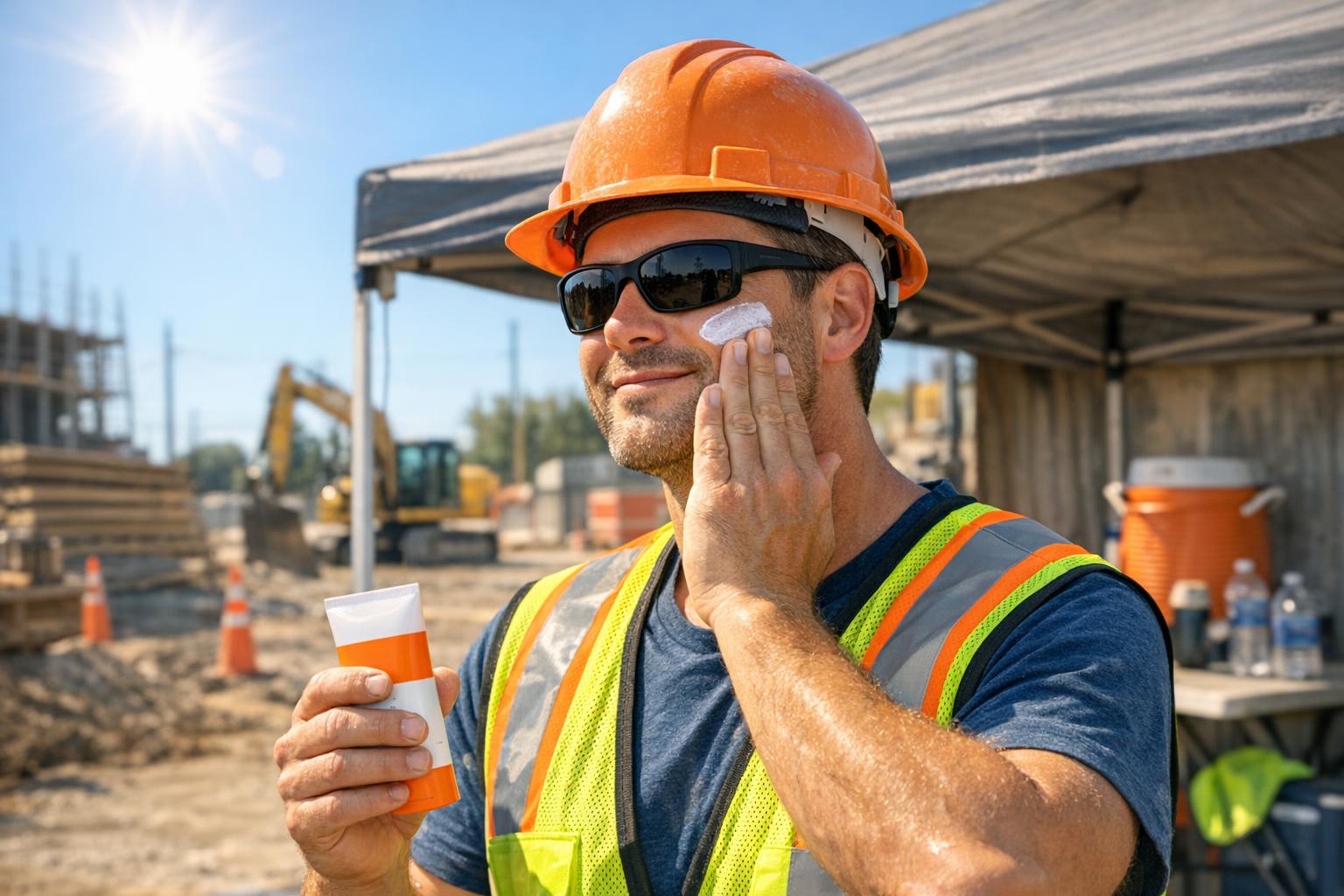
Sunscreen only works if it is the right product, applied correctly, and reapplied on schedule:
- Use a broad‑spectrum sunscreen that protects against both UVA and UVB rays
- Choose SPF 30 or higher for outdoor workers; higher SPF provides more margin for missed spots
- Apply at least 15 minutes before going outdoors so it can bind to the skin
- Use enough: most adults need about one ounce (a shot‑glass full) to cover all exposed areas
- Reapply every two hours, or more often if sweating heavily or wiping the face with towels or rags
Focus on commonly missed areas: ears, back of the neck, scalp along the hairline, tops of hands, and behind the knees if shorts are worn. Provide pump bottles or single‑use packets of sunscreen on site, and treat application like any other PPE step before starting work.
Training and Toolbox Talks That Change Behavior
Sun safety toolbox talks should be short, practical, and specific to that day’s tasks. Points to cover:
- Today’s UV index and work hours when exposure will be highest
- PPE requirements for shirts, hats, eye protection, and neck coverage
- Where shade and break areas are located
- When workers are expected to reapply sunscreen
- Early signs of heat stress and what to do if a coworker shows them
Reinforce that sun safety is not about appearance; it is about preventing occupational disease. Make it clear that supervisors are accountable for enforcing sun safety rules, just as they are for fall protection and lockout procedures.
Encouraging Reporting and Skin Checks
A strong safety culture encourages workers to speak up about skin concerns. Practical steps include:
- Coaching workers to report unusual moles, sores that do not heal, or spots that change color, size, or shape
- Posting clear guidance in break rooms on what to look for and who to tell
- Encouraging workers to get regular skin exams from a healthcare professional, especially after many years of outdoor work
The American Academy of Dermatology recommends that adults monitor their skin for new or changing spots and consult a dermatologist if they see anything suspicious. For employers, supporting early detection means fewer serious cases and less time lost to advanced treatment.
Building Sun Safety into Company Policy
To make sun safety stick, integrate it into your written safety management system:
- Add UV exposure to your hazard assessments and JHAs
- Include sun protection requirements in PPE and dress code policies
- Provide company‑supplied sunscreen and sun‑protective gear where appropriate
- Track heat and sun‑related incidents and near‑misses, and review them during safety meetings
When leadership models good sun safety—wearing hats, long sleeves, sunglasses, and sunscreen on site—it signals that this is not optional. Treating UV exposure as a controllable hazard protects your workforce and supports productivity by keeping crews healthy, alert, and ready to work.
Links Referenced
- Centers for Disease Control and Prevention – Risk Factors for Skin Cancer
- American Cancer Society – Key Statistics for Basal and Squamous Cell Skin Cancers
- World Health Organization / IARC – Solar and Ultraviolet Radiation Agents
- American Academy of Dermatology – SPOT Skin Cancer Guidance