Shorter days change site conditions even if the work itself stays the same. Common hazards include:
- Working in low light at the start or end of a shift
- Moving between bright and dark areas, which affects depth perception
- Glare from vehicle headlights, temporary lighting, or wet surfaces
- Reduced peripheral vision and slower reaction times in the dark
- Shadows that hide trip hazards, uneven ground, or obstacles
The U.S. Bureau of Labor Statistics has consistently shown that most workplace fatalities happen during regular daytime hours, but a significant portion still occur during evening and night shifts where lighting and visibility are often contributing factors (National Bureau of Labor Statistics). When natural light drops, artificial lighting and high‑visibility controls must fill the gap.
Key principle: if you cannot see clearly, assume you cannot be seen clearly.
High‑Visibility Clothing and PPE
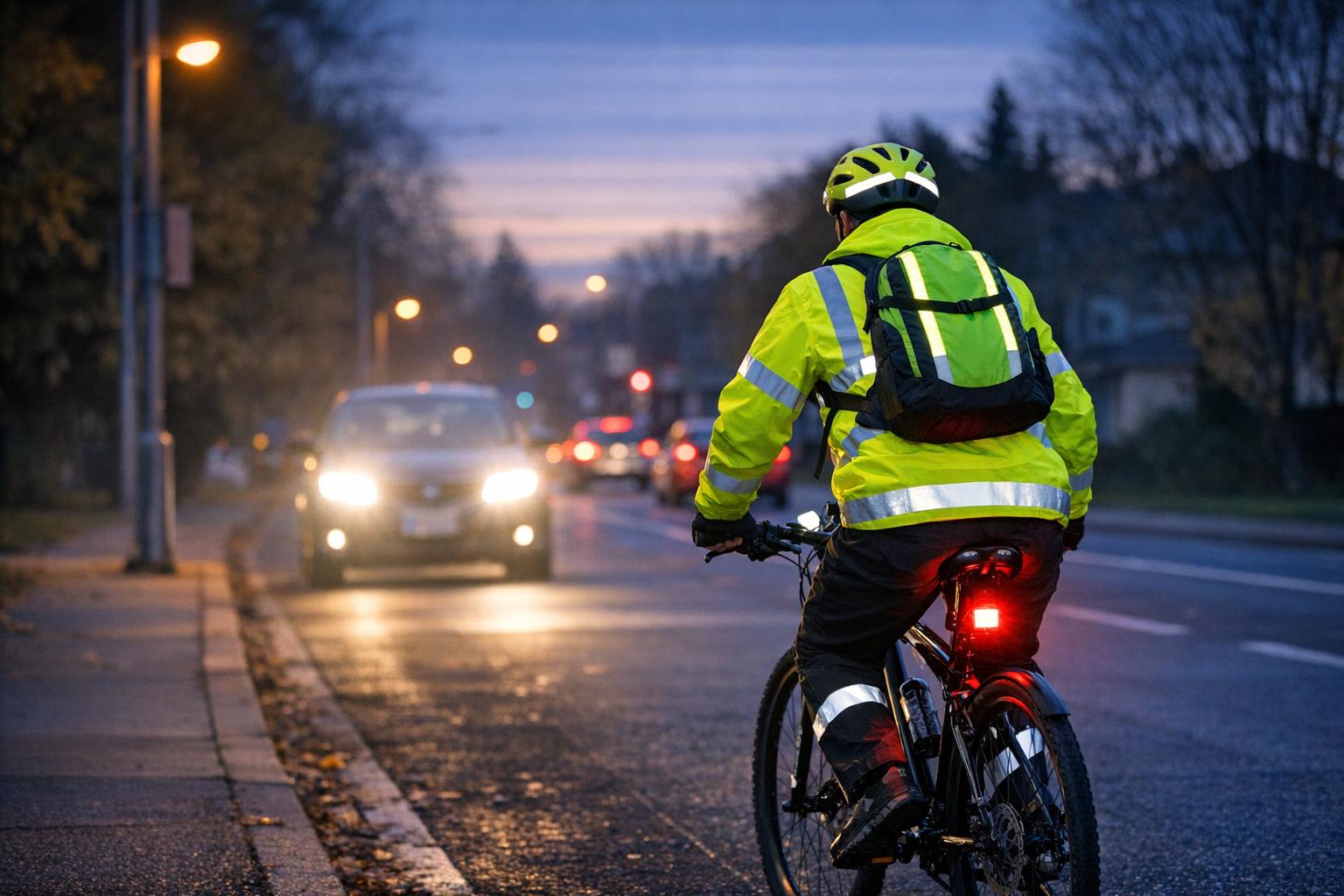
High‑visibility (hi‑vis) clothing is one of the most effective, low‑cost ways to reduce struck‑by risks in low‑light conditions. Hi‑vis PPE is designed to catch and reflect light so that drivers, equipment operators, and other workers can see you sooner and react in time.
Best practices for high‑visibility clothing:
- Wear the right class of hi‑vis garment:
- For work near roadways or mobile equipment, use garments that meet ANSI/ISEA 107 or EN ISO 20471 standards where applicable
- Select the correct type and class based on traffic speed, task, and background conditions
- Keep hi‑vis clean and undamaged:
- Dirt, grease, and wear reduce reflectivity and brightness
- Replace garments if reflective tape is cracked, peeling, or faded
- Avoid covering hi‑vis areas:
- Do not cover reflective strips with backpacks, harness straps, or other gear
- Layer clothing so hi‑vis surfaces remain clearly visible from all sides
- Use additional reflective gear when needed:
- Reflective armbands, leg bands, and helmet stickers increase visibility and movement recognition
- Ensure rain gear, cold‑weather jackets, and outer layers are also high‑visibility
Every worker must put on hi‑vis PPE before entering any area where vehicles, forklifts, heavy equipment, or delivery trucks may operate, especially in low light.
Lighting: Making the Work Area Visible
Adequate lighting is essential when natural daylight is limited. Poorly lit work areas increase the chance of:
- Slips on wet or icy surfaces that are hard to see
- Trips over hoses, cables, debris, or uneven ground
- Struck‑by incidents involving vehicles or moving equipment
- Errors in reading instruments, labels, or safety signs
Best practices for job site lighting:
- Plan for lighting as part of the job:
- Assess when natural light will be low: early mornings, late afternoons, enclosed spaces
- Identify critical task areas, vehicle routes, walkways, and access points that require lighting
- Use proper task and area lighting:
- Area lights for general illumination of work zones, staging areas, and parking
- Task lights for detailed work, inspection, or equipment maintenance
- Ensure lighting levels align with regulatory or industry guidance for the type of work being done
- Position lights to reduce glare and shadows:
- Aim lights so they illuminate the task without shining directly into operators’ or drivers’ eyes
- Avoid creating deep shadows that hide hazards
- Use diffused or indirect lighting where possible to balance brightness
- Inspect lighting regularly:
- Check temporary lights, cords, plugs, and generators at the start of each shift
- Replace burned‑out bulbs and repair damaged fixtures immediately
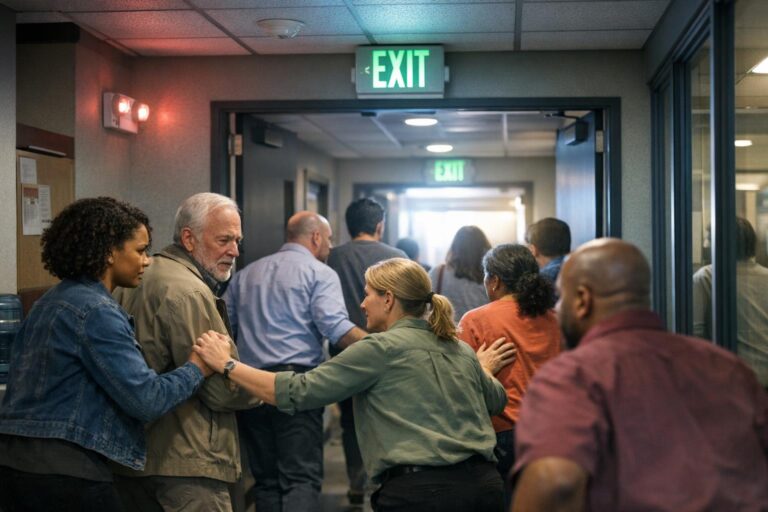
- Verify that emergency lighting and exit signs work as intended
Never start work in a poorly lit area assuming “it will be fine.” If you cannot clearly see walking surfaces, equipment, edges, or coworkers, stop and improve the lighting first.
Traffic, Vehicles, and Mobile Equipment
Shorter days mean more driving and equipment operation in low‑light conditions. This increases the risk of collisions, near‑misses, and struck‑by injuries on and around the job site.
Controls and expectations:
- Separate people and vehicles:
- Use designated pedestrian walkways, barriers, and cones to separate workers from traffic
- Provide clear, reflective signage for vehicle routes, speed limits, and crossing points
- Slow down in low visibility:
- Reduce speed for all on‑site vehicles and mobile equipment when light is poor or weather is bad
- Encourage a “drive to conditions” mindset rather than always driving to the posted limit
- Use vehicle lighting correctly:
- Ensure headlights, brake lights, turn signals, and hazard flashers are all functioning
- Use work lights and beacons on mobile equipment where appropriate
- Avoid high beams where they may blind oncoming drivers or workers
- Communicate clearly:
- Use spotters when backing equipment or maneuvering in tight areas
- Establish agreed hand signals and make sure they are visible to operators
- Use radios when noise, distance, or structures make verbal communication difficult
Workers on foot must maintain eye contact with drivers and operators before crossing paths. Never assume a driver has seen you just because you can see the vehicle.
Weather and Seasonal Conditions
Lower visibility often comes with seasonal weather changes that make conditions more unpredictable. Fog, rain, snow, and ice can reduce visibility and increase stopping distances.
To stay safe in changing conditions:
- Check weather forecasts before shifts and during longer tasks
- Allow extra time for travel and on‑site vehicle movements
- Use additional lighting and reflectors in fog, rain, or snow
- Wear appropriate footwear for wet, icy, or muddy surfaces
- Clear snow and ice from walkways, steps, ladders, and access routes promptly
Supervisors should be prepared to modify or delay tasks when visibility or weather conditions make the work unsafe.
Worker Responsibilities and Safe Behaviors
Every worker has a role in staying visible and protecting others. Adjusting to shorter days means adjusting habits and expectations.
Key behaviors:
- Put on hi‑vis PPE before you enter any traffic or equipment area
- Inspect your PPE, flashlight, and headlamp at the start of each shift
- Report broken lights, dark areas, and near‑misses immediately
- Use designated walkways, not shortcuts through poorly lit areas
- Avoid distractions such as mobile phones when walking near vehicles or in low light
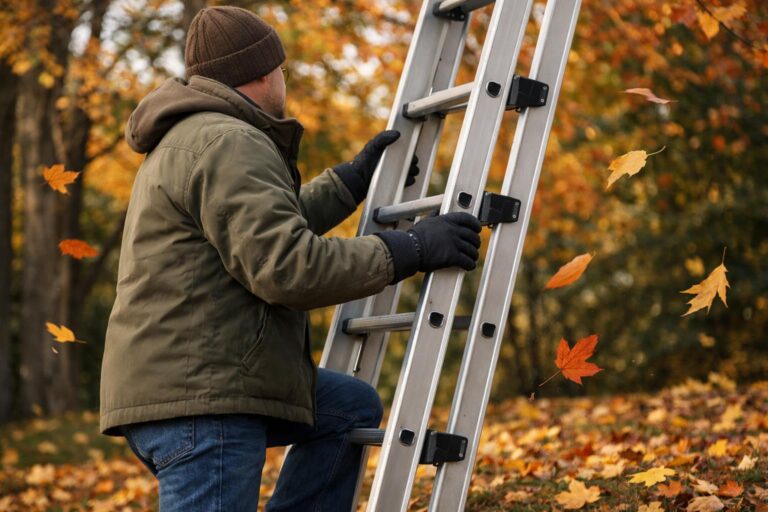
- Maintain three‑point contact on steps and ladders where depth perception may be reduced
Supervisors must lead by example: wearing the correct PPE, stopping work if lighting is inadequate, and reinforcing safe behaviors during pre‑start meetings and toolbox talks.
Links Referenced
- National Safety Council: Night Driving Safety
- U.S. Bureau of Labor Statistics: Fatal Occupational Injuries Tables