Around the fall equinox, day and night are roughly equal, and then daylight hours continue to decrease. For many operations, that means:
- More time working in low light at start-of-shift and end-of-shift
- Sudden glare at sunrise and sunset that blinds both workers and drivers
- Higher likelihood of working in fog, drizzle, and overcast skies
- Increased reliance on artificial lighting that may be poorly placed or poorly maintained
Research from transportation safety agencies shows that the risk of crashes rises during dawn and dusk because of reduced contrast, glare, and driver fatigue. Those same factors affect industrial and construction sites where vehicles and workers share space. As natural light fades, your high-visibility habits must get stronger to compensate.
OSHA consistently ranks “struck-by” hazards among the leading causes of construction fatalities, alongside falls, caught-in/between, and electrocutions. The agency notes that more than 75% of struck-by fatalities involve heavy equipment such as trucks or cranes. Poor visibility is a major contributing factor. OSHA – Struck-By Hazards Handout (PDF)
During the weeks around the fall equinox, that risk increases as lighting changes faster than habits. Workers, drivers, and equipment operators are still operating on “summer autopilot” while dawn, dusk, and weather reduce their ability to see and be seen. This toolbox talk focuses on practical high-visibility habits you can use right now to stay safe as the light fades.
Core High-Visibility Habits for Fall Operations
1. Make High-Visibility PPE Non‑Negotiable
As soon as daylight starts shrinking, treat high‑visibility PPE as mandatory, not optional:
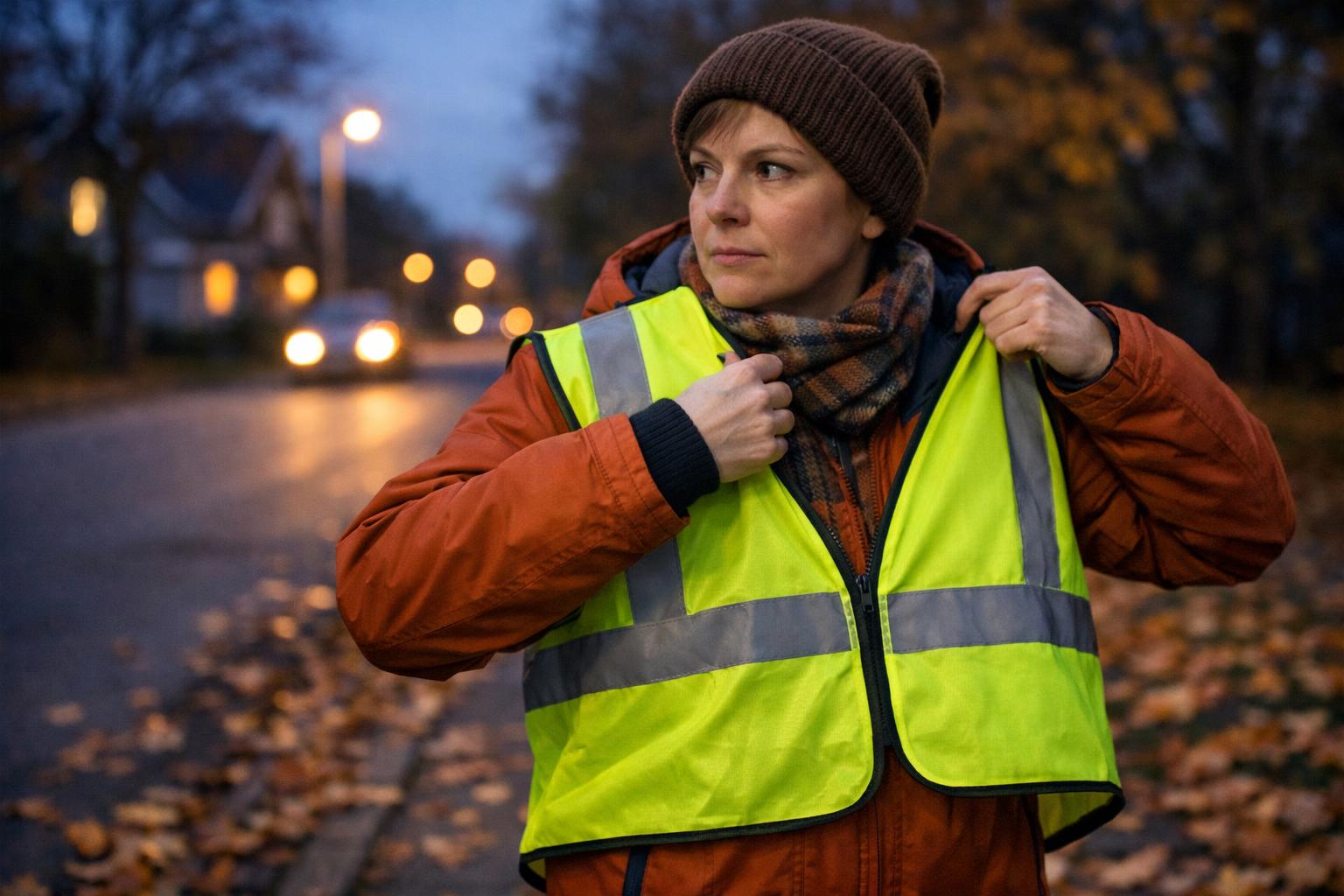
- Use appropriate class vests or garments for your exposure. As a general rule, workers on or near roadways or moving equipment should be in high‑visibility garments that meet recognized standards for background color and retroreflective material.
- Keep garments clean and in good condition. Dirt, grease, and wear dramatically reduce reflectivity and detection distance. Replace gear that is faded, torn, or has cracked reflective tape.
- Ensure proper fit. Oversized vests can snag; tight vests may not stay closed. If your vest can’t be worn correctly over fall layers, it is not fit for purpose.
Toolbox practice: During the fall season, add a “hi‑vis check” to your pre‑task briefing. Supervisors and crew leads should visually confirm that everyone is wearing compliant, serviceable high‑visibility PPE before work starts.
2. Light the Work, Not Just the Area
It is not enough to flood a general area with light. You need focused, task‑appropriate lighting:
- Aim temporary lights so they illuminate the work face and walking routes without shining directly into workers’ or drivers’ eyes.
- Eliminate “dark holes” where pedestrians, spotters, or equipment can disappear from view. Check behind equipment, in laydown areas, and along access paths.
- Maintain lights proactively. Replace burned‑out bulbs, repair damaged cords, and clean lenses. Dust and film can significantly reduce light output.
- Test lighting at the actual time of use. A setup that looks fine at noon may create glare and deep shadows at 6:30 a.m. or 5:00 p.m.
Good habit: Walk the site at dawn or dusk with the sole objective of spotting visibility hazards: glare, blind corners, and poorly lit transitions.
3. Control Vehicle and Equipment Blind Spots
Low light magnifies the danger of blind spots around trucks, forklifts, loaders, and mobile plant. Combine high-visibility clothing with engineered and procedural controls:
- Use spotters with high‑visibility garments and, where appropriate, lighted wands or batons in areas with backing equipment.
- Enforce “no walk” zones around equipment, especially behind vehicles and within swing radii of cranes or excavators. Mark these zones with cones, paint, or barriers wherever practical.
- Require operators to use all available visibility aids (cameras, mirrors, backup alarms) and to stop if they lose sight of their spotter or pedestrians.
During fall, build extra time into tasks involving vehicle movement at dawn and dusk. Rushing in poor visibility greatly increases the odds of a struck‑by event.
4. Adjust Pedestrian and Driver Behavior for Fading Light
Even with PPE and lighting, human behavior is a critical layer of defense:
For pedestrians and ground crews:
- Make eye contact with equipment operators and drivers before crossing paths or entering vehicle lanes.
- Avoid walking between vehicles, especially in dim or changing light, where you can be missed in mirrors.
- Use designated walkways and crossings. If none exist, choose routes that maximize visibility, not just convenience.
For drivers and operators:
- Slow down in low light, at shift changes, and near site entrances where workers may be arriving or leaving.
- Use headlights and work lights correctly; ensure they are functioning and clean.
- Expect glare at sunrise and sunset. If you are struggling to see, assume you are not seeing everyone.
Key fall habit: Treat dawn and dusk as “heightened alert” times when the margin for error is especially thin.
5. Integrate Weather and Seasonal Factors Into Your Planning
Fall does not just change the clock; it changes conditions:
- Fog and mist: Workers in high‑visibility garments are harder to see in fog. Reinforce slower vehicle speeds and increased stopping distances.
- Wet or reflective surfaces: Headlights and floodlights can reflect off wet pavement or metal, causing visual distortion and hiding pedestrians. Adjust light angles and speed accordingly.
- Layering of clothing: As temperatures drop, workers add layers. Confirm that high‑visibility garments remain the outermost layer and are still compliant and visible.
Include visibility checks in your daily job hazard analysis (JHA) or pre‑task plan. When you discuss tools, hazards, and controls, explicitly address how changing light and weather will affect each task that day.
6. Build a Culture of Speaking Up About Visibility
Technical controls only work when people use them. Make high visibility a normal, spoken part of your safety culture:
- Encourage workers to report poor lighting, blocked lines of sight, or missing high-visibility PPE without fear of blame.
- Treat “I could not see them” or “I almost did not see that” as red‑flag warnings that require immediate action.
- Use real near‑miss stories in toolbox talks, especially around the fall equinox, to make the issue tangible and relevant.
When leaders consistently model these behaviors—wearing high-visibility PPE, insisting on adequate lighting, and slowing down equipment in low light—crews follow.
Practical Toolbox Talk Checklist for the Fall Equinox
Use this quick checklist in your next toolbox talk and walk the site together:
- Are all workers in appropriate, clean, and undamaged high-visibility PPE?
- Do high‑visibility garments remain visible over fall layers and rain gear?
- Are work areas, access routes, and vehicle paths adequately lit at the times they are used?
- Have you checked for glare, blind corners, and dark zones at dawn and dusk?
- Are vehicle and equipment “no walk” zones defined and understood?
- Are spotters clearly visible, trained, and empowered to stop work?
- Have you reinforced slower speeds and extra caution during sunrise, sunset, and bad weather?
- Do workers feel comfortable speaking up when visibility is poor or when they are not being seen?
As daylight fades around the fall equinox, risk rises, but it does not have to translate into incidents. High-visibility habits—rooted in the right PPE, smart lighting, controlled vehicle movement, and a culture of speaking up—keep people visible, predictable, and safe through the changing season.