Slips, trips, and falls remain one of the leading causes of workplace injuries across multiple industries. When wet leaves and mud are added to the mix, the risk climbs sharply. These conditions are common in construction, utilities, landscaping, logistics, waste management, and any work that requires outdoor tasks, especially in autumn and during or after rain.
According to the U.S. Bureau of Labor Statistics, falls, slips, and trips accounted for 18% of nonfatal work injuries requiring days away from work in 2020. This represents tens of thousands of incidents each year that are largely preventable when hazards are recognized and controlled. Slips and trips on wet leaves and mud are not just “minor” events; they can lead to fractures, back and head injuries, sprains, strains, and long-term lost time.
Why Wet Leaves and Mud Are High-Risk Surfaces
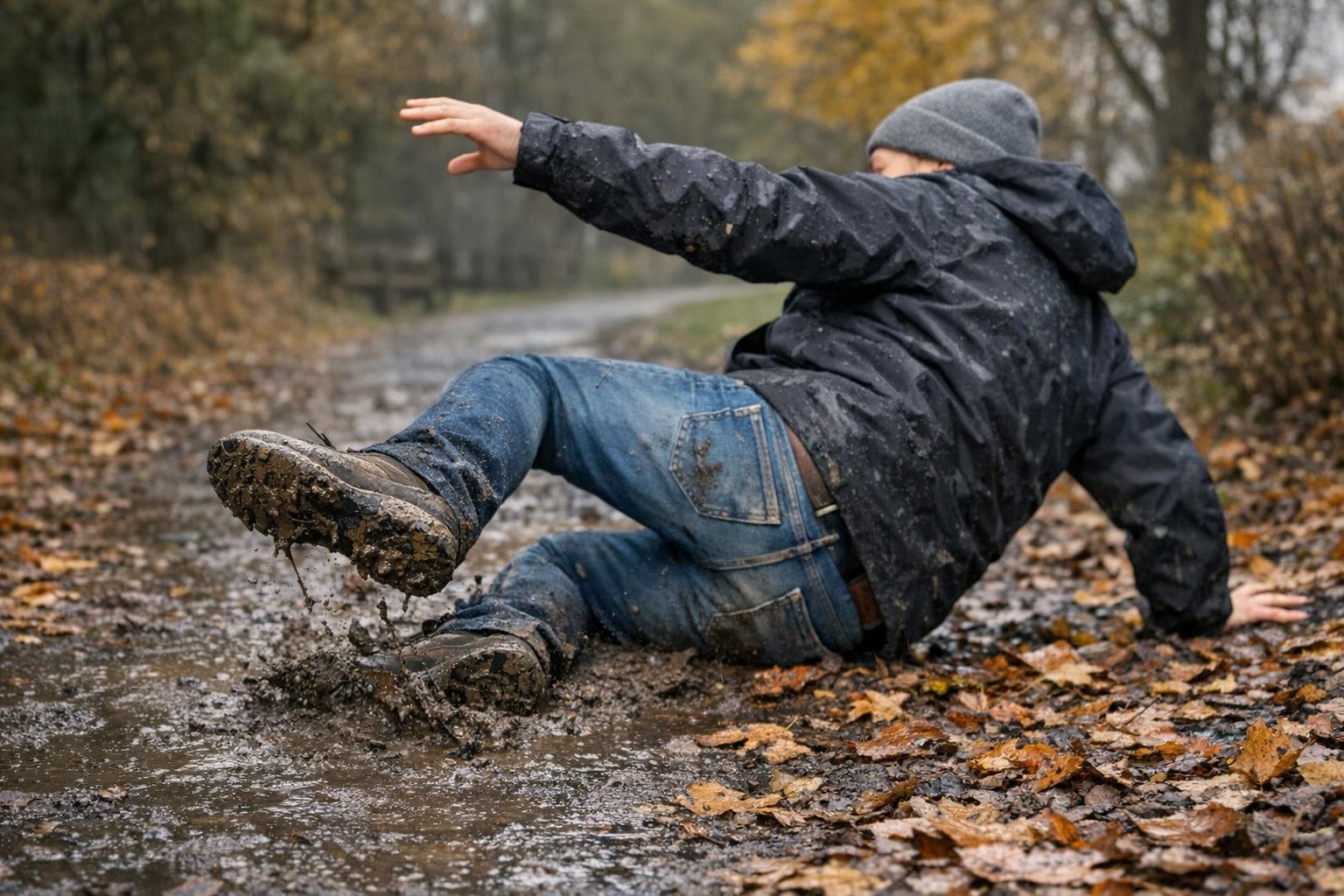
Wet leaves and mud create unique slip hazards compared to dry ground or even ordinary wet floors. Wet leaves act like a lubricant layer between footwear and the walking surface. They can hide uneven ground, potholes, curbs, and other tripping hazards. Mud can pack into boot treads, reducing traction, or form a slick surface over concrete, asphalt, ladders, and steps.
- Accumulation of wet leaves on walkways, stairs, ramps, loading docks, and vehicle steps
- Mud tracked onto access routes, building entrances, and scaffolds
- Poor lighting that makes it hard to see leaf build-up, rutting, or standing water
- Sloped ground where mud and leaves quickly become slippery
- Workers rushing, carrying loads, or not using handrails
Recognizing these conditions early is the first step to preventing slips, trips, and falls.
Common Injury Scenarios Involving Wet Leaves and Mud
Many slip and trip incidents follow predictable patterns:
- Stepping onto a patch of wet leaves while exiting a vehicle, causing feet to slide out from under the worker
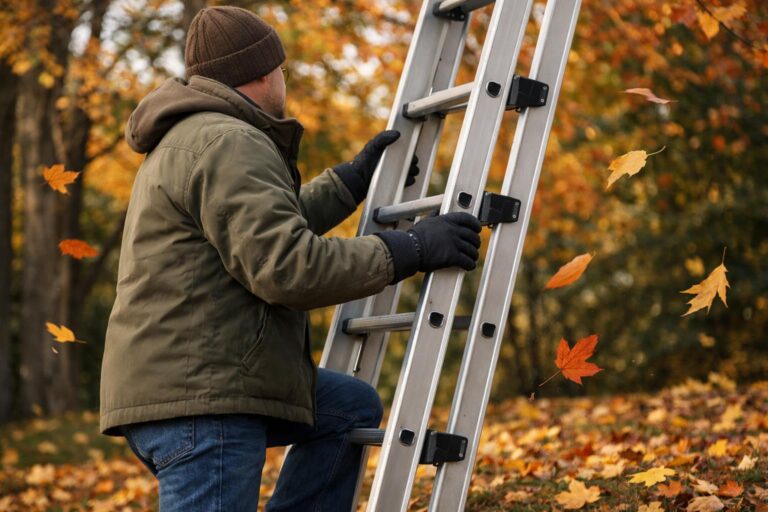
- Climbing a muddy ladder or scaffold access, losing footing on a rung smeared with mud
- Walking across a leaf-covered path where hidden stones or holes cause a misstep and ankle injury
- Carrying materials over muddy ground, with balance compromised and no free hand to break the fall
- Entering buildings with mud or wet leaves stuck to boots, then slipping on interior smooth floors
Understanding these scenarios helps teams anticipate where controls are most needed: vehicle access points, site entrances, walkways, steps, and high-traffic routes.
Preventive Site Controls for Wet Leaves and Mud
Good housekeeping and site planning are essential controls for slip and trip hazards.
Implement these measures:
- Designated walkways: Establish clear, designated walking routes that are monitored and maintained, especially near parking areas, site entrances, and portable welfare units.
- Regular leaf removal: Schedule routine clearing of leaves from paths, steps, ramps, loading docks, and entryways during leaf-fall seasons and after storms.
- Mud control at access points: Use stone, gravel, or mats at site entrances and high-traffic ground to reduce mud build-up. Consider temporary walkways or ground protection in heavily trafficked muddy areas.
- Drainage management: Improve drainage to avoid standing water that mixes with soil to create slippery mud.
- Lighting: Ensure adequate lighting at early-morning and evening work times so workers can see leaves, mud patches, and ground irregularities.
- Grit and traction materials: Apply grit, sand, or other traction agents to known problem spots when conditions are wet or freezing.
These controls should be part of your regular site inspections, with particular focus after heavy rain or windy days that deposit new leaves.
Footwear and Personal Precautions
Workers play a critical role in reducing slip and trip risk by using appropriate footwear and safe walking techniques.
Key practices include:
- Proper footwear: Wear safety boots with deep, self-cleaning tread suitable for outdoor conditions. Avoid worn soles that have lost their pattern and grip.
- Inspect and clean soles: Check boots at the start of each shift and throughout the day. Remove caked mud and trapped leaves from treads before entering vehicles, climbing ladders, or walking on smooth floors.
- Use three points of contact: When entering and exiting vehicles or climbing steps and ladders, always maintain three points of contact, and test the surface before committing full weight.
- Shorter steps and slower pace: Take smaller, deliberate steps on wet or uneven ground. Avoid rushing, running, or carrying loads that block your view of the path.
- Use handrails and supports: Use installed handrails wherever provided, especially on outdoor stairs, loading docks, or temporary access steps.
- Keep hands free where possible: Use mechanical aids or team lifts so at least one hand can be kept free for balance.
Work Planning and Supervision
Supervisors and safety leaders should integrate slip, trip, and fall prevention into daily planning, particularly when rain, leaf-fall, or soft ground is expected.
Effective steps include:
- Daily hazard assessments: Identify where wet leaves and mud are likely to accumulate as part of pre-task planning. Update controls as site conditions change.
- Restricting access: Temporarily block off paths, slopes, or areas that become especially slippery in wet conditions until they can be made safe.
- Staging materials: Plan material storage to reduce the need to carry loads across muddy or leaf-covered ground.
- Training and reminders: Cover seasonal slip and trip hazards, including wet leaves and mud, in toolbox talks and induction sessions. Reinforce expectations for footwear, housekeeping, and safe walking.
- Reporting and feedback: Encourage workers to promptly report slippery areas, poor lighting, or recurring mud build-up. Act quickly on these reports.
Vehicle, Equipment, and Ladder Considerations
Wet leaves and mud can affect more than just walking surfaces.
Pay special attention to:
- Vehicle steps and platforms: Clean mud and leaves from vehicle steps, grab handles, and platforms at least once per shift and whenever buildup is observed.
- Equipment access: Inspect access ladders and platforms on mobile plant, generators, and other equipment to ensure rungs and treads are free from mud and leaf debris.
- Portable ladders: Before use, check ladder feet for mud and ensure they are set on firm, non-slippery ground. Avoid placing ladder feet on leaf-covered or muddy surfaces without cleaning and stabilizing the area.
- Load areas: Keep tailgates, trailer decks, and loading docks free from wet leaves and mud to prevent slips while loading or unloading.
Housekeeping and Team Responsibilities
Slip, trip, and fall prevention is a shared responsibility. Everyone on site should:
- Remove leaves and mud from common walkways when they are spotted, not just during scheduled cleanups
- Keep tools, cords, and materials out of walk paths to avoid compounding trip hazards with slippery surfaces
- Support new workers and visitors by pointing out known high-risk areas and safer routes
- Participate actively in toolbox talks by sharing incidents and near-misses so lessons can be learned
When workers and supervisors treat wet leaves and mud as serious hazards, rather than minor inconveniences, the rate and severity of slips, trips, and falls can be significantly reduced.