Working in high winds is one of the most underestimated hazards on construction sites, industrial facilities, and outdoor workplaces. Wind is invisible, can change direction rapidly, and often becomes dangerous before workers recognize the warning signs. Whether you are erecting scaffolding, operating mobile plant, using cranes, or simply carrying sheet materials across site, high winds significantly increase the risk of falls, dropped objects, structural failures, and equipment tip‑overs.
Many serious incidents occur because routine tasks are carried out as normal, even though wind speeds have climbed into an unsafe range. When a sudden gust hits, workers often have no time to react. A structured approach to assessing wind risk, setting clear limits, and communicating stop‑work triggers is critical to keeping everyone safe when working in high winds.
Understanding Wind Speed and Risk Levels
To manage high‑wind risk, teams must be able to recognize when conditions have moved from safe to unsafe. Light breezes may cause minor discomfort, but as wind speed rises, it can destabilize workers and equipment. According to the UK Met Office Beaufort scale, winds of 25–31 mph (strong breeze) can make walking difficult and cause large branches to move, while winds of 39–46 mph (near gale) can make it hard to stand upright and lead to minor structural damage. Above this level, the risk to people and structures rapidly increases.
Toolbox talks on working in high winds should reinforce that “safe” wind speeds are task‑specific. Lifting operations, roof work, and scaffold erection often have lower maximum wind thresholds than general site work. The lifting plan, equipment manufacturer instructions, and company procedures must always define the wind speed at which work must be suspended.
Common Hazards When Working in High Winds
High winds can amplify almost every existing hazard on site. Key risks include:
- Falls from height
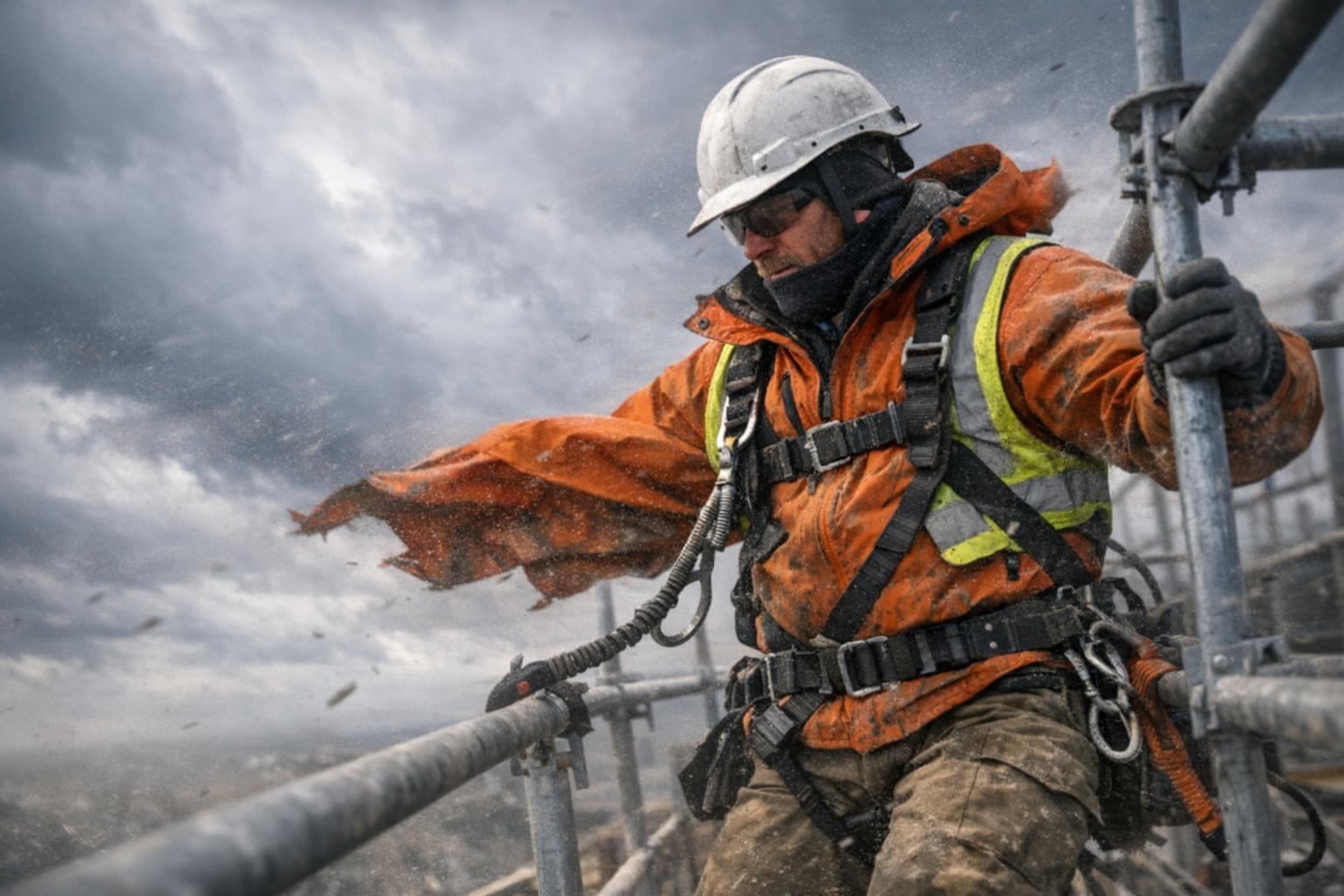
High winds can unbalance workers on roofs, scaffolds, ladders, and elevated work platforms. Gusts can push people towards edges or cause them to overreach. Loose clothing or materials may flap and distract workers or catch on structures. - Falling and flying objects
Materials, tools, signage, and debris can be lifted or knocked off platforms, roofs, and scaffolds. Even small items become dangerous projectiles in high winds. Pedestrians, workers at lower levels, and nearby public areas can all be struck by falling or flying objects. - Crane, MEWP, and plant instability
Cranes, mobile elevated work platforms (MEWPs), forklifts, and telehandlers are particularly vulnerable to side loads from strong gusts. Wind acting on loads, boom structures, or large surfaces can cause tipping, uncontrolled movement, or collisions. - Structural and temporary works failure
Unsecured scaffolds, hoardings, temporary roofs, fencing, formwork, and partially completed structures are all at greater risk of collapse or partial failure when exposed to high winds. Dangerous collapses often occur when structures are left unbraced or incomplete. - Manual handling and material control
Carrying large sheets (e.g., plywood, plasterboard, cladding, roofing sheets) in wind acts like handling sails. A sudden gust can twist, drag, or knock workers off balance. This increases the risk of strains, trips, collisions, and falls from open edges.
Planning Work for Windy Conditions
Effective control of high‑wind risk begins at the planning stage. Toolbox talks should highlight the following planning controls:
- Assess seasonal and local wind conditions when programming roof work, crane lifts, and façade installation.
- Specify maximum safe wind speeds for each critical task and piece of equipment, based on manufacturer data and standards.
- Ensure an anemometer or other certified wind‑measuring device is available and used at the correct height, especially for crane and lifting operations.
- Incorporate stop‑work criteria into method statements and lifting plans, including clear wind speed thresholds.
- Plan secure storage for materials and waste so that nothing can be blown from height or off site.
- Design temporary works, scaffolds, and hoardings to withstand expected wind loads and ensure they are inspected after strong winds.
Safe Work Practices During High Winds
When conditions on site begin to change, workers must know how to respond. A high‑quality toolbox talk on working in high winds should emphasize:
- Monitoring wind conditions
Do not rely on guesswork. Use calibrated anemometers to monitor wind speed at relevant heights, particularly for cranes, MEWPs, and roof work. Check weather forecasts at the start of shift and during the day to spot incoming high‑wind events, gust fronts, or storms. - Respecting stop‑work limits
If wind speeds reach or exceed the specified limit for an activity or piece of equipment, work must be stopped. Team leaders must not override or ignore these thresholds. Stopping early is always safer than trying to “finish a quick job” in unsafe conditions. - Securing materials, tools, and structures
As wind increases, secure or remove loose items from roofs, scaffolds, and elevated platforms. Use tool lanyards where appropriate. Tie down materials and waste, and close or lock gates, doors, and access panels that could suddenly slam or swing. Ensure scaffold ties, bracing, and guardrails are correctly installed and inspected. - Adjusting access and working positions
Avoid working close to exposed edges when winds rise. Use additional fall protection where appropriate, such as guardrails, personal fall arrest systems, or inertia reels, in line with company procedures. Restrict access to roofs and fragile surfaces when gusty conditions are forecast or observed. - Modifying crane and MEWP operations
Follow the manufacturer’s maximum wind speed strictly. Consider wind acting on the load’s surface area and on the boom. Suspend lifting of large or lightweight panelized loads earlier than smaller, denser loads. When wind speeds approach limits, lower booms to a safe position and secure equipment as per the manufacturer’s instructions.
Communication and Supervision When Working in High Winds
Clear communication is essential to staying safe when working in high winds. Supervisors must brief all workers at the start of the shift on expected weather, high‑risk activities, and defined wind thresholds. If conditions worsen, supervisors should call short, focused toolbox talks to reinforce controls and confirm any changes to work sequencing.
Workers must be encouraged to speak up if they feel conditions have become unsafe, even if wind speeds have not yet reached formal limits. A culture that supports stopping work without blame is a major safeguard against wind‑related incidents.
After a High‑Wind Event
Once strong winds have passed, it is not automatically safe to resume work. Before restarting:
- Inspect scaffolds, hoardings, edge protection, and temporary roofs for movement, damage, or missing components.
- Check that cranes and MEWPs are undamaged and correctly positioned, following manufacturer guidance on post‑storm checks.
- Walk work areas to identify dislodged materials, loose fixings, or damaged signage and fencing.
- Confirm that any protective sheeting, netting, or tarpaulins are secure and not creating additional wind load or fall hazards.
Toolbox Talk Reminders for Working in High Winds
A concise set of reminders can be used to close your safety talk and reinforce key points:
- Always check the forecast; never assume conditions will stay the same all day.
- Know the maximum safe wind speed for your task and equipment.
- Use proper instruments to monitor wind, especially at height.
- Stop work when wind approaches or exceeds the defined limit.
- Secure materials, tools, and temporary structures before and during high winds.
- Report any unsafe condition or damage immediately, and do not resume work until it has been inspected and made safe.
By planning ahead, respecting wind limits, and acting early as conditions change, teams can reduce the risk of serious incidents when working in high winds and maintain a safe, well‑controlled site.
For more on wind-related risks, see understanding high-wind hazards on construction sites. Three Sixty Safety supports construction safety programs with on-site safety inspections that help crews plan for severe weather before it arrives.
References
- Met Office – Beaufort wind force scale: https://www.metoffice.gov.uk/weather/guides/coast-and-sea/beaufort-scale