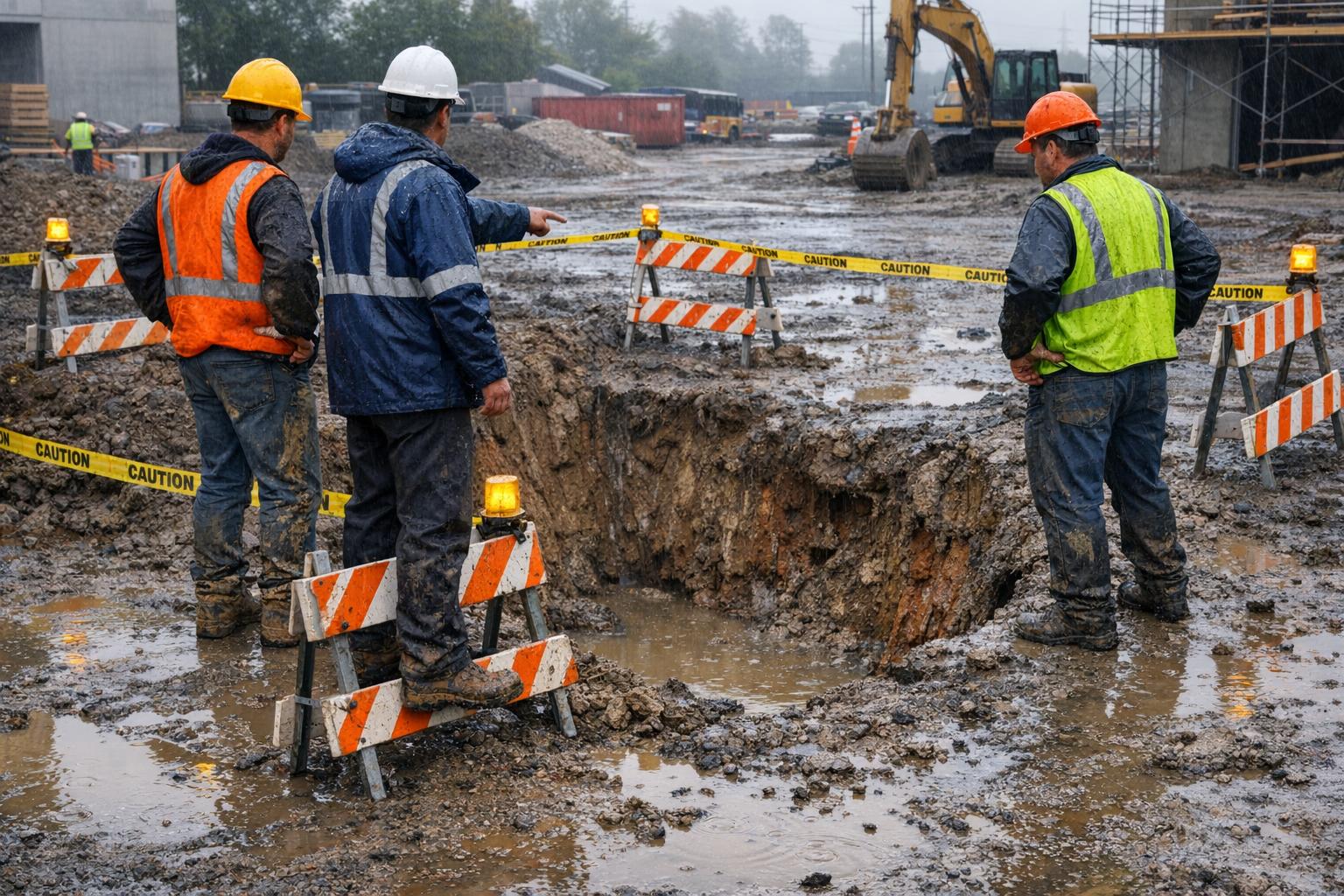
Trenching and excavation work is already high risk. When you add rain-soaked soil, the danger level rises sharply. Water changes soil strength, trench wall stability, and how equipment behaves around the excavation. This toolbox talk focuses on how to recognize trench hazards in wet conditions and what controls to apply before anyone enters or works near a trench.
Why Rain-Soaked Soil Increases Trench Hazards
Water is one of the most common causes of trench failures. When rain saturates soil, it becomes heavier and loses strength. Hydrostatic pressure builds behind trench walls, increasing the likelihood of a sudden cave-in without warning.
OSHA identifies cave-ins as the greatest risk in excavation work and notes that one cubic yard of soil can weigh as much as a car. That weight can crush or suffocate workers in seconds. In rain-soaked soil, that same volume may weigh even more due to water saturation, increasing the force on trench walls.
Rain also hides hazards. Surface water can conceal cracks, tension cracks, soft spots, and erosion at the edge of the trench. Standing water at the bottom of the trench can undercut walls, wash out previously stable material, and reduce the effectiveness of protective systems if not managed correctly.
Recognizing Warning Signs in Wet Trenches
Workers and supervisors must be trained to identify visual and physical warning signs in rain-affected excavations, including:
- Tension cracks or sloughing: Cracks parallel to the trench edge or soil peeling away from the wall
- Bulging or heaving at the base: Soil pushing inward at the bottom of the trench
- Soft, spongy soil at the edge: Ground that feels unstable when walking near the trench
- Water seepage: Continuous water trickling from the trench wall or floor
- Changes in soil color or layering: Indicating different soil types with varying drainage and strength
- Eroded or undercut edges: Soil washed away by surface water, reducing support near the trench lip
Any of these conditions in rain-soaked soil should trigger immediate reassessment by a competent person and, if necessary, evacuation from the trench.
Soil Types and Saturation Risk
Soil classification matters even more in wet conditions. Stable rock is rare; most trenches cut through Type A, B, or C soils as defined by OSHA. Type C soil, such as sand or gravel, is the least stable and becomes especially dangerous when wet. Even cohesive clay soils can lose strength quickly when saturated or repeatedly cycled through wet and dry conditions.
A soil that appears stable in dry weather may behave like a completely different material after heavy rain. Relying on yesterday’s soil classification in today’s rain-soaked conditions is not acceptable. The competent person must re-evaluate soil type and trench safety after significant rainfall, flooding, or changes in water table.
Water Accumulation and Trench Stability
Standing water is a clear red flag. Water at the bottom of a trench increases pressure on walls and can cause sliding, toppling, or bottom heave. Water also interferes with footing and access, making slips, trips, and falls more likely.
Water management must be planned before digging and updated when rain is forecast. Controls can include:
- Surface water diversion: Berms, ditches, and grading to keep runoff away from the trench
- Pumps and well points: Removing water from the trench while ensuring discharge does not erode edges
- Protection of spoil piles: Keeping spoils at least 2 feet back from the edge, even more in wet conditions, and preventing runoff from spoils into the excavation
- Access route planning: Stable, non-slip access ways that do not direct water flow into the trench
Trench Protective Systems in Wet Conditions
Protective systems such as sloping, benching, shoring, and shielding are mandatory when required by regulation, but their design must account for wet soil conditions. Saturated soils may require:
- Flatter slopes than normally used for that soil type
- Additional benching to remove weight from the top of the trench
- Stronger, properly designed shoring systems suitable for saturated loads
- Shields (trench boxes) installed and used strictly according to the manufacturer’s instructions
A trench box in rain-soaked soil does not make the entire trench safe. Workers must stay inside the shield’s protected zone at all times. The area outside the shield may remain highly unstable, especially after heavy rainfall.
Competent Person Responsibilities After Rain
Regulations require a competent person to inspect trenches daily and after any event that might increase hazards, including rainstorms. In wet conditions, this responsibility becomes critical. The competent person must:
- Inspect before each shift and after any rainfall, however minor
- Check for new cracks, sloughing, or movement of trench walls
- Verify that protective systems remain correctly installed and adjusted for wet conditions
- Confirm that water removal systems are operating effectively and safely
- Reassess access points (ladders, ramps) for slip and fall risks
- Stop work and remove personnel from the trench if conditions become unsafe
If there is any doubt about trench stability in rain-soaked soil, the trench must be considered unsafe until proven otherwise.
Safe Work Practices Around Wet Trenches
Managing trench hazards in rain-soaked soil extends beyond those working at the bottom of the trench. Everyone on site must follow strict controls around the excavation:
- Keep heavy equipment back: Maintain safe setback distances, especially when the surrounding soil is saturated, to avoid added load on trench walls.
- Control traffic: Use barricades and signage to keep vehicles and pedestrians away from trench edges.
- Maintain spoil pile distance: Keep spoils and materials at least 2 feet from the edge and protect them from runoff.
- Use proper access: Provide ladders or other safe means of egress within 25 feet of workers in trenches 4 feet or deeper, keeping rungs and landings free of mud and standing water.
- Manage visibility: Poor weather often reduces visibility. Use high-visibility clothing and clear communication protocols around equipment and trench edges.
Emergency Preparedness in Wet Conditions
When working in or near trenches during or after rain, emergency preparedness must be specific to the conditions. Plans should cover:
- Immediate evacuation criteria if cracks, water flow, or soil movement are observed
- Communication methods in noisy, wet environments
- Rescue procedures that do not put additional workers at risk of entering an unstable trench
- Coordination with local emergency services, including accurate site access details
Practicing these procedures before a storm system arrives ensures faster response if conditions deteriorate.
Planning Work Around Weather
Planning is often the most effective control. Before starting trenching operations, supervisors and crews should:
- Review weather forecasts and expected rainfall
- Schedule critical trench work to avoid known heavy rain periods where possible
- Establish clear rules on when work will stop due to rain, lightning, or flooding risk
- Plan for securing trenches before leaving site, including backfilling or safely benching open excavations where required
Treating weather as a key risk factor rather than an inconvenience leads to better decisions and fewer incidents.
By recognizing how rain-soaked soil changes trench conditions and applying strict inspection, protection, and work practices, crews can significantly reduce the risk of cave-ins, slips, and other trench-related incidents during and after wet weather.