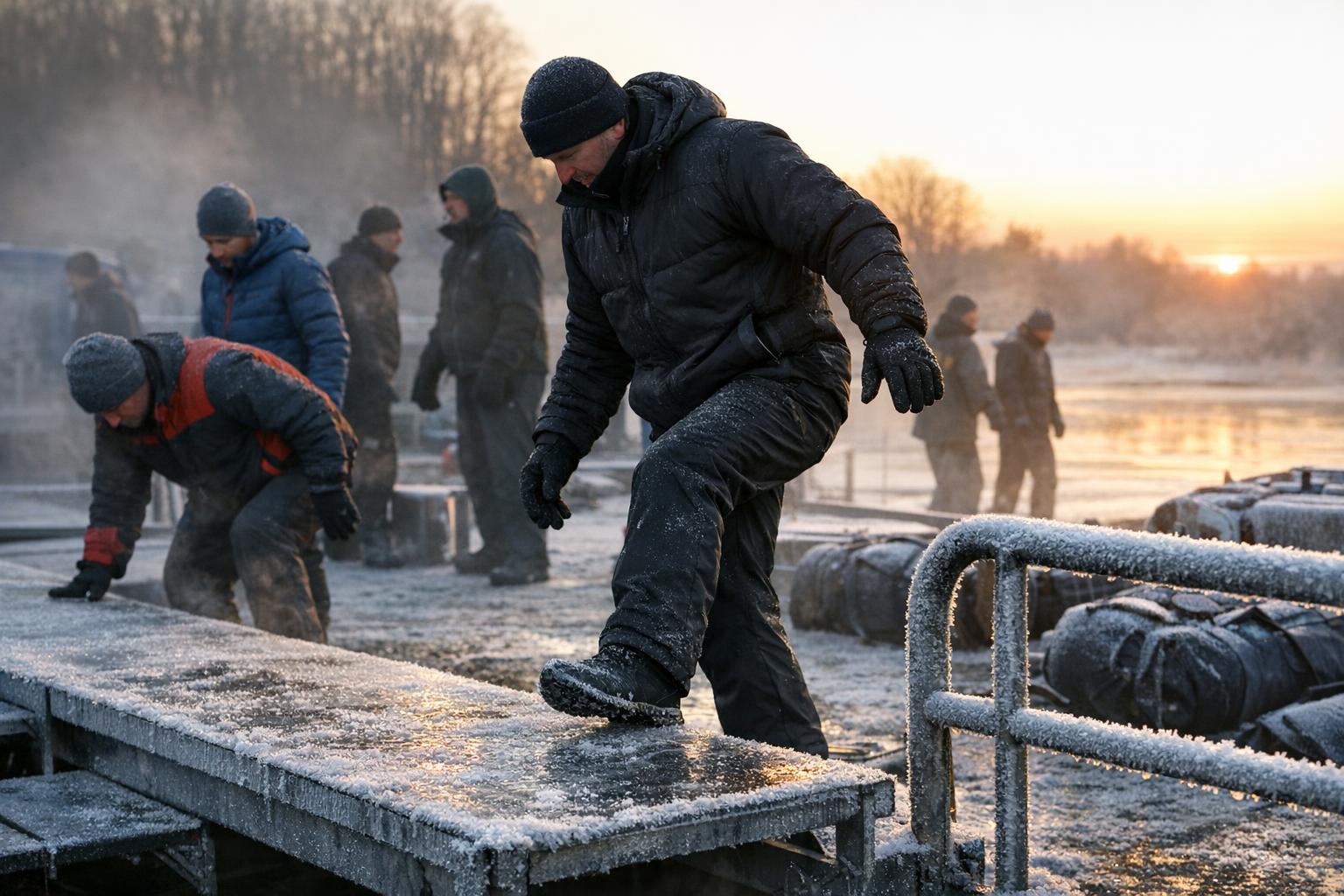
When temperatures dip overnight, early morning frost can turn your worksite into a hidden hazard zone. Walkways, ladders, platforms and equipment that looked dry at the end of shift can be coated in an invisible layer of ice by the time the first crew arrives. That thin frost is enough to make boots slide, hands lose grip and machinery become unstable.
Slips, trips and falls are one of the most common causes of workplace injuries. The U.S. Bureau of Labor Statistics reports that falls, slips and trips accounted for 18% of all nonfatal work injuries requiring days away from work in 2020.[1] Early morning frost is a big contributor to that risk, especially in colder months and in shaded areas that don’t warm up quickly.
Recognizing Early Morning Frost Hazards
Early morning frost and slippery equipment hazards are often underestimated because the danger can be hard to see. Clear ice can form on:
- Metal platforms and walkways
- Steps and ladders
- Equipment decks and access ways
- Handrails and grab handles
- Truck beds, trailers and tailgates
- Ramps, loading docks and scaffold planks
Frost and black ice can look like slightly wet or dull surfaces instead of obvious snow or ice. Surfaces in shade, on the windward side of structures, or near water sources can stay icy long after the sun is up. Equipment parked overnight can develop frost even when the ground around it looks clear.
Early morning frost also affects how equipment operates. Hydraulics, controls and brakes can respond differently in cold, and frost on pedals or platforms can reduce traction and footing. Slippery equipment increases the chance of falls while mounting or dismounting and raises the risk of losing control of machines.
Pre-Shift Checks for Early Morning Frost and Slippery Equipment
A toolbox talk on early morning frost should emphasize a methodical pre‑shift routine. Before work starts, build in time to check:
- Walking surfaces: Inspect primary walkways, stairs and ramps for frost or ice. Pay special attention to shaded or low-lying areas.
- Access points: Look closely at ladders, steps, catwalks, scaffold access, platforms and staging areas.
- Equipment contact points: Check steps, handrails, grab handles, platforms, pedals and operator stations on all equipment and vehicles.
- Loading and unloading zones: Inspect loading docks, tailgates, flatbeds and lift-gate platforms.
If you see any sheen, dullness or slick-looking surface, treat it as ice until proven otherwise. Use your boot to gently test traction from a stable stance with a handhold available.
Safe Walking and Working Practices in Early Morning Frost
Adapting behavior on frosty mornings reduces the chance of slips and falls. Key habits include:
- Walk slowly and deliberately: Take shorter steps and keep your feet flat under your center of gravity. Avoid sudden turns or quick starts and stops.
- Use handrails and grab points: Maintain three points of contact whenever possible, especially on stairs, ladders and equipment steps.
- Keep hands free: Avoid carrying items that block your view or prevent you from grabbing a handhold. Use backpacks, tool belts or carts instead of overloading your arms.
- Avoid shortcuts: Do not cut across frosty grass, dirt slopes or un-cleared areas. Stick to designated, treated walkways.
- Watch transition zones: Thresholds, doorways, step-downs from equipment and changes in surface type are common slip locations when frost is present.
Footwear selection matters. Wear slip-resistant, insulated work boots appropriate for your environment. Check tread daily and replace footwear that has worn, smooth soles that reduce traction on frost.
Preventing Slips on Equipment and Vehicles
Slippery equipment is a major source of early morning incidents. When mounting and dismounting:
- Inspect before climbing: Look at steps, rungs, platforms and handholds for frost, snow, mud or grease.
- Clear frost first: Use an ice scraper, stiff brush or de-icing product approved by your company. Never assume a quick wipe with a glove is enough.
- Maintain three points of contact: Two hands and one foot, or two feet and one hand on the equipment at all times.
- Face the equipment: Always face the machine when climbing on or off; never jump down from cabs, beds or platforms.
- Do not rush start-up: Build a few extra minutes into your start-up procedure on frosty mornings to clear surfaces properly.
Operators should also consider how frost affects visibility and controls. Clear mirrors, windows, cameras and lights thoroughly. Make sure steps, pedals and control platforms are dry and non-slip before moving the machine.
Housekeeping and Site Controls for Frost Conditions
Controlling early morning frost and slippery equipment hazards is not only about individual behavior; it requires coordinated site controls and housekeeping. Supervisors and safety leaders should ensure:
- Treatment of walkways: Apply sand, grit or appropriate de-icing products to high-traffic paths, stairs and ramps before the first shift arrives when frost is expected.
- Barricades and signage: Rope off or clearly mark especially icy sections until they can be treated. Redirect foot traffic to safer routes.
- Designated equipment parking: Park equipment on level, well-drained surfaces that can be inspected and treated. Avoid low spots where water can pool and freeze.
- Lighting: Provide adequate early morning lighting so workers can see sheen or gloss indicating frost. Poor lighting makes black ice much harder to detect.
- Non-slip surfaces: Install and maintain non-slip treads or coatings on steps, platforms and ladders where practicable. Replace worn anti-slip materials promptly.
Encourage workers to report slippery areas immediately and to request treatment rather than trying to work around the hazard. Quick reporting prevents repeat exposure and multiple injuries at the same location.
Cold Weather PPE and Body Mechanics
Early morning frost usually comes with low temperatures. Cold muscles, stiff joints and bulky clothing can all make slips worse. To reduce risk:
- Warm up: Take a few minutes to stretch and gently warm muscles before starting physical tasks.
- Dress in layers: Wear clothing that allows free movement and does not snag on equipment when using handrails or ladders.
- Use proper gloves: Select gloves that balance warmth and grip, so you can hold railings and tools firmly even in freezing conditions.
Proper body mechanics also make a difference. Keep your center of gravity low, carry loads close to your body and avoid twisting while stepping on potentially slick surfaces. If you start to slip, try to bend your knees and lower yourself rather than stiffening up and falling from a greater height.
Planning and Communication for Early Morning Frost
Early morning frost and slippery equipment hazards should be part of seasonal safety planning. Include frost conditions in job hazard analyses, pre-task planning and daily toolbox talks during colder months. Discuss:
- Weather forecasts and expected overnight lows
- Areas of the site that freeze first or thaw last
- Responsibility for treating walkways and access points
- Procedures for delaying specific tasks until surfaces can be made safe
Supervisors should adjust schedules where necessary, allowing daylight and site treatment to reduce frost hazards before high-risk activities such as roof work, scaffold use or heavy material handling begin.
Clear, consistent communication helps everyone stay alert to changing conditions. Encourage all workers to speak up when they encounter early morning frost, report near-misses and suggest improvements. A few extra minutes of preparation can prevent serious injuries caused by slippery equipment and icy surfaces.
Want to go deeper on seasonal slip hazards? Read how weather and surfaces affect slip risk and our guide to choosing slip-resistant footwear for your team. If you need help building frost and winter hazards into your program, explore Three Sixty Safety’s safety training or contact our team.