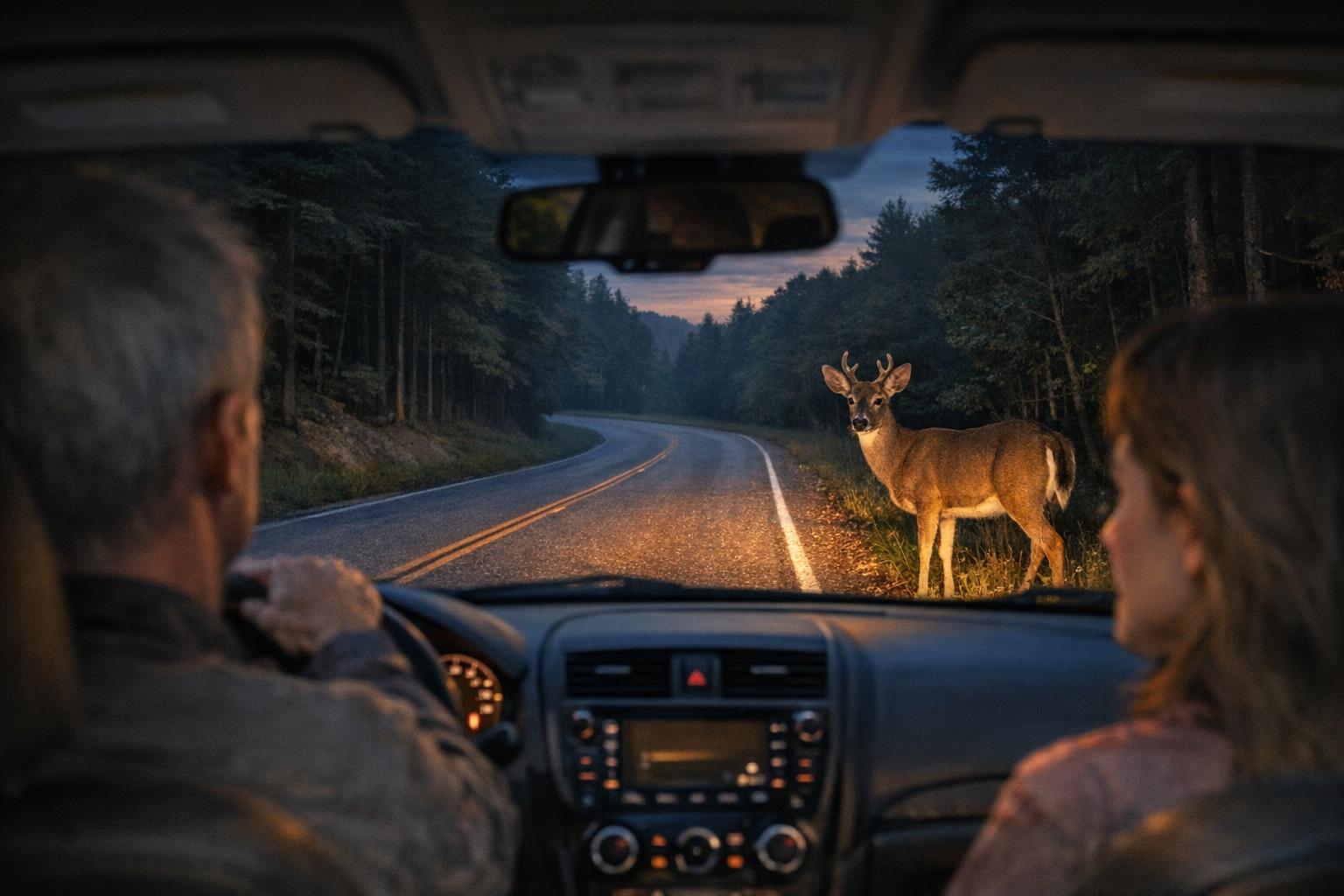
Michigan drivers hit a deer roughly every nine minutes. In 2025 the state recorded 58,271 vehicle-deer crashes and 13 deaths, nearly the same as 2024’s 58,324 crashes, 1,816 injuries and 14 deaths. Half of the 2024 fatalities were motorcycle riders.
Wildlife awareness on the road matters for any business with employees driving for work, from service technicians and delivery drivers to sales staff commuting across Macomb, Oakland, St. Clair and the rest of the state. Deer are a foreseeable hazard. Treat them like any other: assess the risk, control it and talk about it before every trip. This toolbox talk gives your crews a practical plan.
Why Wildlife Awareness Matters for Michigan Employers
A deer strike can mean injured workers, a damaged vehicle out of service, missed jobs and an insurance claim. Under MIOSHA’s general duty clause, employers are expected to protect workers from recognized hazards, and for anyone driving for work in Michigan, deer are about as recognized as a hazard gets. A simple wildlife awareness program shows you’ve done your part and keeps your people and fleet moving.
When and Where the Risk Is Highest in Michigan
- October through December: The fall rut puts deer on the move. November is the worst month of the year (10,017 crashes in 2024), with October close behind.
- Dawn and dusk: The most deer crashes happen between 6:00 and 8:59 a.m. Fatal crashes peak between 9:00 p.m. and midnight.
- After the time change: When daylight saving time ends in early November, many morning and evening commutes shift into darkness right as the rut peaks. See why shorter days increase risk.
- Rural, wooded and farm roads: Two-lane roads with tree lines, cornfields, creeks and wetlands are prime crossing areas.
- Suburbs and highways: Deer crashes aren’t just a rural problem. Oakland County ranks among the top counties in the state, and freeways that pass through green space see deer crossing at highway speed.
- Up North: Drivers heading to job sites in northern Michigan should also watch for elk in the northern Lower Peninsula and moose and black bear in the Upper Peninsula. A moose strike is far more dangerous than a deer strike.
- Year-round smaller hazards: Wild turkeys, Canada geese, raccoons and loose farm animals can also cause sudden braking and swerving.
Safe Speed and Following Distance
- Slow down in posted deer-crossing areas and on unlit roads, even if you’re under the speed limit.
- Increase your following distance so you have room to brake if the vehicle ahead stops for a deer.
- Use high beams on dark roads when there’s no oncoming or leading traffic.
- Wear your seat belt on every trip. It’s your best protection in any crash.
Scanning and Hazard Perception
- Scan both shoulders and ditches, not just the lane ahead.
- At night, watch for eye shine reflected in your headlights.
- Where there’s one deer, there are usually more. If one crosses, slow down and expect others to follow.
- Pay extra attention near deer-crossing signs, tree lines, fields and water.
What to Do When a Deer Appears: Don’t Veer for Deer
Michigan’s long-running safety message is simple: Don’t veer for deer.
- Brake firmly and stay in your lane. Hold the wheel steady.
- Do not swerve. Swerving can send you into oncoming traffic, a tree or a ditch, which is often far worse than hitting the animal.
- Sound the horn with one long blast to try to move the deer along.
- Motorcyclists: brake firmly, stay upright and slow down as much as possible if a collision can’t be avoided. Wear full protective gear, especially in the fall.
- Heavy vehicles and trucks should never swerve. A controlled impact is safer than a rollover or jackknife.
After a Deer Strike in Michigan
- Pull off safely and turn on your hazard lights.
- Check for injuries. Call 911 if anyone is hurt or the vehicle is blocking the road.
- Stay away from the deer. An injured deer can kick and cause serious injury. Don’t try to move it.
- Report the crash to the local police department, county sheriff or Michigan State Police. A police report is often needed for your insurance claim.
- Document the scene with photos of the vehicle, road and location.
- Follow company procedures. Notify your supervisor or fleet manager right away and complete your incident report.
- If you want to keep the deer, you need a free roadkill salvage permit from the Michigan DNR. Don’t take it without one.
- Call your insurer. Deer damage is usually covered under comprehensive coverage, not collision.
Planning Controls for Employers
- Plan routes that avoid known deer hotspots where practical. Michigan Traffic Crash Facts publishes deer crash data by county.
- Schedule work to reduce dawn, dusk and night driving from October to December when possible.
- Maintain vehicles. Clean, correctly aimed headlights, good brakes and tires, and clear windshields all buy reaction time.
- Track your fleet’s strikes and near misses to spot patterns by route, time and season.
- Brief drivers before the rut each October, and again after the time change. Pair this talk with vehicle and transport safety training and our winter driving safety tips for employees.
Worker Responsibilities
- Plan your trip with deer activity in mind, especially in the fall.
- Adjust speed for light, weather and road conditions.
- Report deer sightings, near misses and strikes promptly.
- Take part in toolbox talks and driver safety training.
Toolbox Talk Discussion Points
- Which routes we drive are highest risk for deer? Where have we had near misses?
- How will our schedules change after daylight saving time ends?
- What does “Don’t veer for deer” look like in our trucks and vans?
- Who do we call and what do we report after a strike?
- What’s one thing each of us will do differently this fall?
Need Help With Safety Training?
Three Sixty Safety helps Michigan employers build practical safety programs, from toolbox talks to on-site safety training. Call (586) 778-9900 or contact us to schedule training for your team.
Michigan Road Safety Resources
- Michigan Traffic Crash Facts: 2024 Deer Crash Fact Sheet (PDF) (opens in a new tab)
- Michigan Traffic Crash Facts: Data by Year and County (opens in a new tab)
- Michigan Department of Natural Resources (opens in a new tab)
- MIOSHA: Michigan Occupational Safety and Health Administration (opens in a new tab)
- NHTSA: National Highway Traffic Safety Administration (opens in a new tab)