Wildfire smoke is a mixture of gases and fine particles from burning vegetation, building materials, and other fuels. The particles that create the biggest health risk are called fine particulate matter or PM2.5—tiny particles that are 2.5 micrometers in diameter or smaller and can penetrate deep into the lungs. Agencies such as the U.S. Environmental Protection Agency (EPA) consider PM2.5 a serious health concern because it is linked to heart and lung problems and even premature death in people with existing conditions.
Health Effects of Wildfire Smoke Exposure
- Short-term exposure can irritate eyes, nose, and throat, and cause coughing, wheezing, shortness of breath, headaches, and fatigue.
- Workers with asthma, COPD, or other respiratory or cardiac conditions may experience severe flare-ups.
- Children, older adults, pregnant people, and those with diabetes or cardiovascular disease are more vulnerable.
- Even healthy workers can be affected when smoke is heavy or exposure lasts for several days, with symptoms like chest tightness, difficulty taking a deep breath, and decreased exercise tolerance.
- Workers doing physically demanding tasks inhale more air per minute, drawing more smoke particles deep into their lungs.
Why Monitoring Air Quality Matters
Because wildfire smoke can move quickly and conditions can change over the course of a shift, relying on your senses alone is not enough. A hazy skyline or a smell of smoke are warning signs, but harmful levels of particulate matter may be present even when the sky looks acceptable. Supervisors and safety leads must use objective air quality data and a clear plan to adjust work.
Understanding the Air Quality Index (AQI)
The main tool for understanding smoke conditions is the Air Quality Index (AQI). The AQI converts measurements of pollutants like PM2.5 into a simple scale and categories such as “Good,” “Moderate,” “Unhealthy for Sensitive Groups,” “Unhealthy,” “Very Unhealthy,” and “Hazardous.” Many government agencies publish current AQI and PM2.5 levels online and through mobile apps so that worksites can track conditions throughout the day.
For example, the U.S. EPA’s AirNow website and app provide local AQI and smoke maps, including a Fire and Smoke Map that integrates data from regulatory monitors, temporary monitors, and low-cost sensors. Similar tools exist in Canada and other countries through national or regional environmental agencies. The key point for your toolbox talk: know which official source your organization uses, and check it at the start of the shift, at midday, and any time conditions visibly worsen.
Planning Ahead for Wildfire Smoke
Before wildfire smoke season starts, employers should complete a written plan that spells out who will monitor air quality, what AQI or PM2.5 thresholds trigger protective actions, how to communicate with workers, and how to provide training, equipment, and medical support. Supervisors should know when to modify work, move workers indoors, provide respiratory protection, or suspend operations.
Using the Hierarchy of Controls
When smoke is present, the preferred approach is to use the hierarchy of controls: start with eliminating or reducing exposure, then use engineering and administrative controls, and reserve respirators and other personal protective equipment (PPE) as a last line of defense.
Elimination and Substitution
Elimination and substitution are not often possible for outdoor work during wildfire smoke events, but scheduling can sometimes shift the most strenuous tasks to days or locations with better air quality. Where work can be delayed without creating a separate hazard, postponing outdoor tasks until conditions improve is often the safest choice.
Engineering Controls
- Ensure HVAC systems are functioning properly and use high-efficiency filters where feasible.
- Keep windows and doors closed when outside smoke levels are high.
- Use portable HEPA filtration units in enclosed spaces such as jobsite trailers, break rooms, and control rooms to create cleaner-air refuges.
Administrative Controls
- Rotate workers so that no one spends the entire shift in the smokiest areas.
- Shorten the duration and intensity of outdoor tasks.
- Schedule heavy exertion for early morning when smoke may be lighter.
- Build in more frequent breaks in cleaner-air areas and encourage hydration.
- Provide daily briefings on current AQI or PM2.5 levels, forecasted changes, and specific controls in place for that day.
- Repeat safety toolbox talks regularly during smoke season so all workers know how to recognize symptoms and what to do if they feel unwell.
Respiratory Protection
When engineering and administrative controls cannot reduce exposure enough, respirators may be necessary.
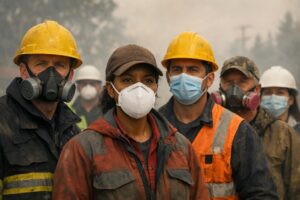
- Cloth masks and simple dust masks do not filter fine particles effectively and do not provide a reliable seal.
- For PM2.5 from wildfire smoke, filtering facepiece respirators such as N95s or similar certified respirators are typically recommended by health and safety authorities.
- Employers requiring respirators must comply with applicable regulations, including a written respiratory protection program, medical evaluations, fit testing, and training.
- Beards and facial hair in the sealing area can prevent a tight fit.
- Respirators increase the effort needed to breathe—consider this for workers with heart or lung conditions.
- Some regulations allow voluntary use of filtering facepiece respirators when air quality is degraded but not yet at mandatory thresholds. Workers should receive basic information on use, replacement, and storage.
Recognizing and Responding to Symptoms
- Workers must be trained to recognize early symptoms of smoke-related problems and to stop work and report symptoms immediately.
- Early signs include burning eyes, dry cough, or mild shortness of breath; these may progress to more serious issues if ignored.
- Anyone experiencing chest pain, severe shortness of breath, confusion, or blue lips or face needs urgent medical evaluation.
- Sites should have a clear procedure for what to do if a worker becomes ill: where to go, who to notify, and how to access medical care quickly.
- Supervisors should document incidents, review work conditions, and adjust controls if patterns emerge—such as multiple workers developing symptoms on days with similar AQI levels.
Extra Precautions for Vulnerable Workers
- Workers with asthma or other chronic lung diseases should have an up-to-date action plan from their healthcare provider and keep rescue inhalers readily available.
- They may require lower exposure thresholds, modified duties, or reassignment during heavy smoke events.
- Pregnant workers and those with cardiovascular disease may also need adjustments based on medical advice.
Planning for the Future
Beyond the immediate health effects, wildfire seasons are growing longer in many regions, meaning workers can experience repeated smoke exposures year after year. Planning for recurring events rather than treating each smoke episode as an isolated emergency helps organizations protect long-term worker health, maintain productivity, and comply with evolving regulations and guidance.
Links Referenced
- U.S. EPA – Wildfire Smoke and Health
- U.S. EPA – AirNow (Air Quality Index)
- U.S. EPA – Fire and Smoke Map