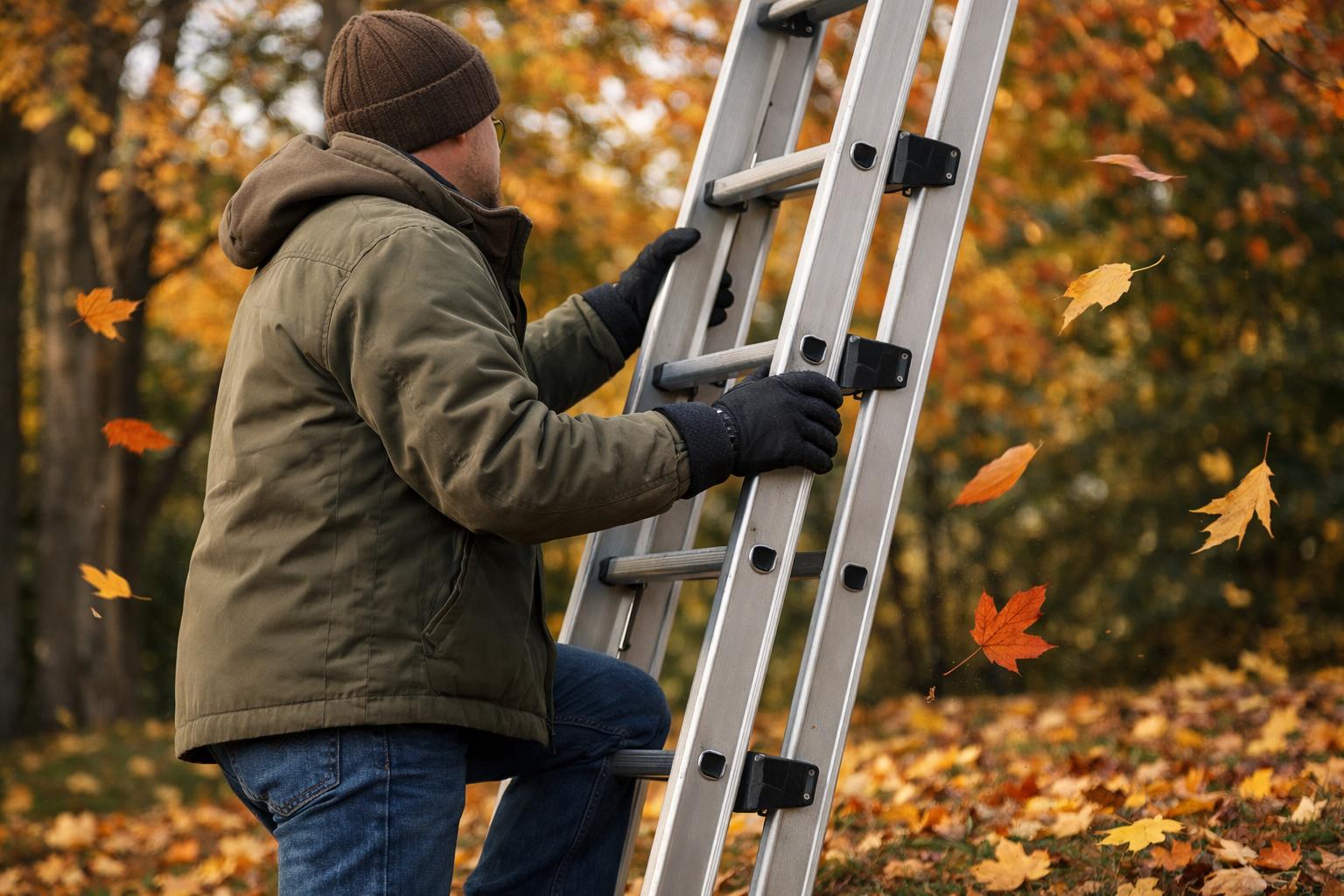
Autumn brings cooler temperatures, shorter days and unpredictable gusts of wind that can quickly turn a routine ladder task into a serious fall hazard. Whether you are changing lights, clearing gutters, trimming branches or doing building maintenance, understanding how wind interacts with ladders is critical for staying safe.
Wind is a major contributor to falls from height. The U.S. Bureau of Labor Statistics identifies falls, slips and trips as a leading cause of fatal work injuries every year in construction and maintenance work. When you add unstable footing and sudden wind gusts to a ladder, the risk increases significantly. Focusing your toolbox talks on ladder safety in autumn wind helps workers recognize and control those hazards before they climb.
Why Autumn Wind Makes Ladder Work More Dangerous
Autumn weather changes quickly. A calm morning can become windy by mid‑shift, and workers often feel pressure to “get it done” before the weather gets worse or daylight runs out. This combination increases the chance of poor decisions around ladder setup and use.
Key autumn‑specific risk factors include:
- Gusty, shifting winds that can push ladders sideways or backward
- Wet leaves and debris that make the ground soft and slippery
- Saturated soil after rain that allows ladder feet to sink or shift
- Workers wearing bulkier clothing that can catch the wind
- Reduced daylight that makes it harder to see overhead and ground‑level hazards
These conditions make it essential to choose the right ladder, set it up correctly, and decide whether it is safe to climb at all.
Selecting the Right Ladder for Windy Conditions
Not every ladder is suitable for outdoor work in windy conditions. Before beginning any autumn ladder task, evaluate ladder type, length and condition.
Consider the following points:
- Use the right type: Extension or straight ladders are commonly used for exterior building and tree work, but step ladders may be safer for some lower‑level tasks if they can be fully opened on firm, level ground.
- Check the duty rating: Confirm the ladder’s load capacity is adequate for the worker, tools and materials combined. Overloading a ladder in wind increases instability.
- Avoid makeshift equipment: Do not use chairs, boxes, pallets or stacked objects as a substitute for a ladder or as a way to gain extra reach.
- Inspect thoroughly: Look for damaged rungs, bent rails, missing feet, loose spreaders or corroded hardware. Any structural damage becomes more dangerous when the ladder is exposed to wind forces.
Always follow applicable standards and manufacturer instructions for the specific ladder type your workforce uses.
Safe Ladder Setup in Autumn Conditions
Most ladder incidents begin with poor setup. Autumn adds extra variables, so workers must slow down and follow a clear checklist before climbing.
Ground conditions:
- Clear leaves, mud and debris so ladder feet contact solid, non‑slippery surfaces.
- Avoid placing ladders on soft soil that could shift or settle under load.
- Never place a ladder on loose gravel, stacked pallets or other unstable bases to gain extra height.
Angle and positioning:
- Use the 4‑to‑1 rule for extension and straight ladders: for every 4 feet of ladder height, place the base 1 foot away from the wall or support.
- Ensure the top of the ladder extends at least 3 feet above the landing surface when accessing a roof or platform.
- Face the ladder directly toward your work whenever possible; working off to the side increases the risk of tipping in wind.
Securing the ladder:
- Tie off the ladder at the top to a secure anchor point if feasible.
- Use ladder stabilizers or stand‑off brackets to increase contact area and reduce side‑to‑side movement.
- Have a second person “foot” the ladder at the base when conditions are gusty or when working at significant height.
Assessing Wind Before and During Use
One of the most important autumn ladder safety decisions is whether conditions are appropriate to work at height at all. Toolbox talks should reinforce that workers have the authority and responsibility to stop work when conditions become unsafe.
Practical wind‑related checks include:
- Monitor local weather forecasts before planning ladder work and throughout the day.
- Establish a clear company guideline for maximum safe wind speeds for ladder use. Many organizations choose to suspend ladder work in sustained winds above approximately 25 mph or when strong gusts are present.
- Watch for sudden wind shifts around corners of buildings and near trees or structures that funnel air.
- Re‑evaluate conditions regularly; do not assume conditions at the start of the job will remain constant.
If ladder movement is noticeable while climbing or working, or if the worker feels the wind physically pushing them or the ladder, the job should be stopped immediately.
Climbing and Working Safely on Ladders in Wind
Once the ladder is selected and properly set up on stable ground, workers still need to use conservative techniques to control their center of gravity and reduce wind exposure.
Key safe‑use practices:
- Maintain three points of contact (two hands and one foot, or two feet and one hand) at all times while climbing.
- Face the ladder while ascending and descending; never slide down the rails.
- Keep your belt buckle or navel between the side rails. Do not lean or overreach to the side; climb down and reposition the ladder instead.
- Limit the amount of tools and materials carried while climbing. Use tool belts, hoist lines or mechanical lifts to move heavier or bulkier items.
- Wear close‑fitting clothing that does not flap excessively or act like a sail in strong winds.
- Do not stand on the top cap or top step of a step ladder, or on the top three rungs of an extension ladder.
Supervisors should observe ladder work periodically, especially during windy autumn days, to reinforce training and identify unsafe behaviors such as overreaching, rushing or bypassing tie‑off procedures.
Planning Work to Reduce Time on Ladders
Another effective autumn ladder safety strategy is to reduce how often workers need to climb at all. Planning and job design can significantly cut ladder exposure, particularly in unpredictable wind.
Consider these controls:
- Use mobile elevating work platforms or scaffolds for higher‑risk or long‑duration tasks.
- Prefabricate components at ground level so there is less assembly or adjustment required at height.
- Group outdoor ladder tasks for calmer parts of the day when wind is historically lower.
- Establish a simple checklist that supervisors use before authorizing any outdoor ladder job in autumn, including weather, ground conditions, task duration and available alternatives.
Embedding Ladder Safety in Your Autumn Toolbox Talks
To keep ladder safety top of mind during the autumn season, integrate these points into regular toolbox talks:
- Recent examples of ladder incidents or near misses at your site or in your industry
- Daily weather forecast and how it affects scheduled ladder tasks
- Demonstration of correct ladder angle, tie‑off methods and stabilizer use
- Clear stop‑work authority for any worker who believes wind or footing makes ladder use unsafe
Repetition matters. When workers hear consistent messages about wind, footing and correct ladder practices, they are more likely to pause, reassess conditions and prevent falls before they happen.
Links for cited or referenced information