Personal protective equipment (PPE) is often the last line of defense between a worker and a serious injury. Yet in many workplaces, PPE is chosen once, written into a procedure, and then forgotten. Tasks evolve, tools change, materials are updated, and production methods are improved. When the work changes, your PPE requirements must be re‑assessed or you risk exposing people to new, uncontrolled hazards.
A task that used to involve hand tools may now use powered equipment. A cleaning chemical might be replaced with a stronger product. A one‑off confined space entry might become routine. Each of these changes can introduce different or higher‑level risks. Relying on old PPE decisions for new task conditions can lead to injuries, non‑compliance, and costly downtime.
Regulatory expectations and standards support this dynamic approach. OSHA’s general industry PPE standard (29 CFR 1910.132) requires employers to assess the workplace to determine if hazards are present, or are likely to be present, and to select and maintain appropriate PPE based on that assessment. The assessment is not a one‑time event; it should be revisited when conditions or tasks change.
Why Task Changes Trigger a New PPE Assessment
Any change in how a job is done can change the type, level, or duration of exposure. When production targets increase, workers may spend longer near noise or moving machinery. When a new chemical, adhesive, or solvent is introduced, the old gloves or respirators might no longer provide adequate protection. When a new piece of equipment is installed, it may introduce pinch points, flying particles, or higher noise levels.
Common task changes that should trigger a PPE reassessment include:
- New equipment, tools, or machinery
- New products, materials, or chemicals
- Process changes, including automation or new work methods
- Layout changes that affect traffic or proximity to hazards
- Changes in work environment, such as temperature, lighting, ventilation, or noise levels
- Changes in work pace, staffing, or shift patterns
- Introduction of non‑routine tasks such as maintenance, shutdown work, or emergency repairs
The key principle is straightforward: if the task is different in any way that could affect exposure, revisit the PPE assessment before the new method is rolled out.
Core Steps of a PPE Assessment When Tasks Change
A structured PPE assessment helps you move beyond guesswork or habit. When a task changes, use a consistent process:
-
Review the updated task
Document the new steps of the work. Identify who is doing the work, where it is happening, how often, and for how long. Separate routine tasks from non‑routine or infrequent tasks, such as setup, cleaning, or troubleshooting. -
Identify hazards and exposure scenarios
Walk the job, talk to the people doing the work, and review incident data. Consider:- Physical hazards: impact, pinch points, cuts, falls, vibration, heat, cold, sharp edges
- Chemical hazards: skin contact, inhalation, splashes, absorption
- Biological hazards: blood or body fluids, mold, bacteria
- Noise: continuous, intermittent, or impulsive noise
- Radiation and energy sources: UV, infrared, lasers, electricity
-
Evaluate whether existing controls are sufficient
Use the hierarchy of controls. Confirm whether hazards can be eliminated, substituted, engineered out, or controlled administratively before relying on PPE. Where PPE is still needed, verify that:- The type of PPE matches the specific hazard
- The level of protection is adequate for the new exposure
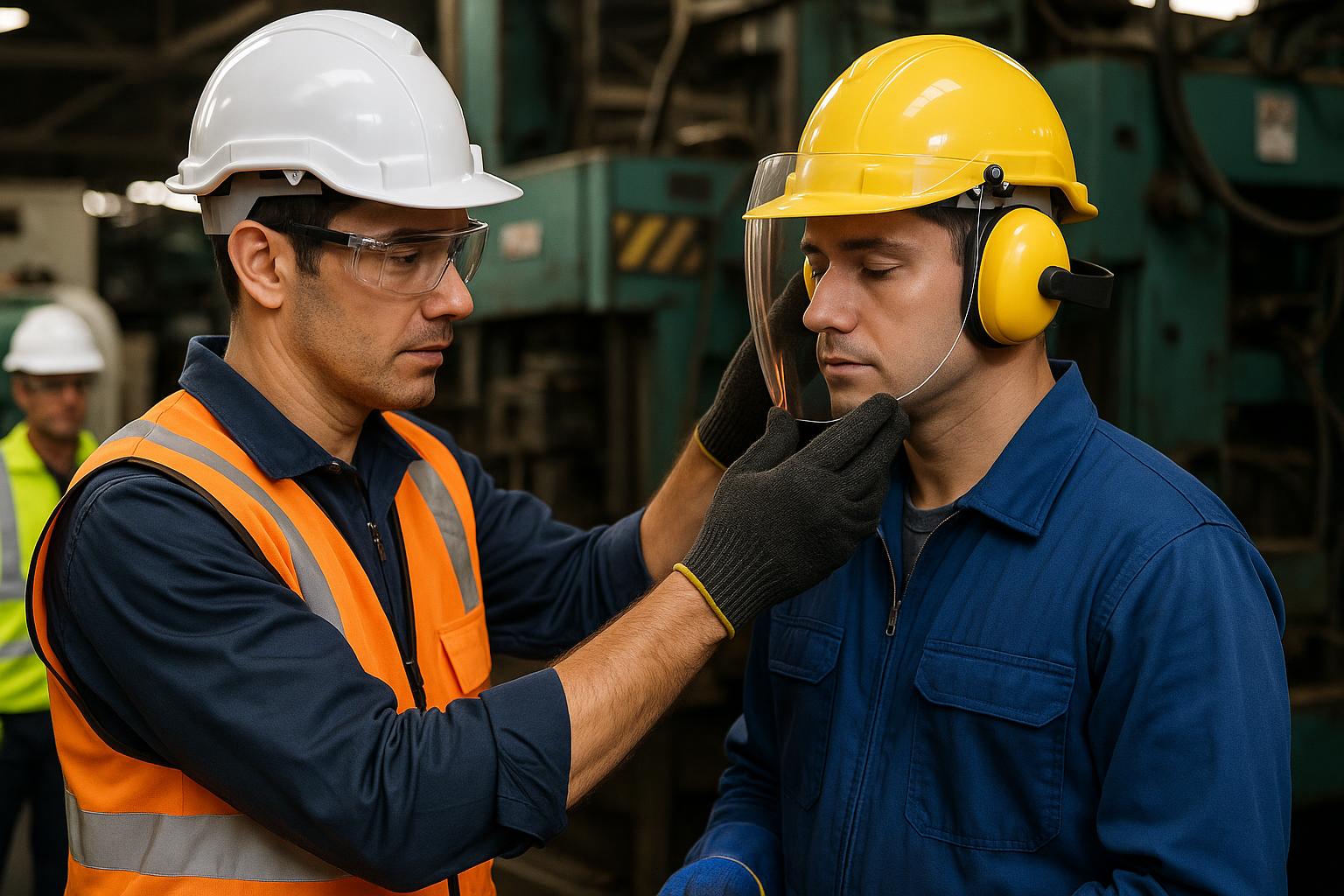
- PPE is compatible with other required protection (for example, hearing protection with hard hats, eye protection with respirators)
-
Select or adjust PPE based on current standards
When tasks change, the appropriate PPE might also change. Examples include:- Switching from safety glasses to goggles or face shields when risk of splashing or flying particles increases
- Moving from general‑purpose work gloves to cut‑resistant or chemical‑resistant gloves based on hazard changes
- Upgrading hearing protection if noise measurements exceed allowable limits
- Reassessing respiratory protection when airborne exposures change in type or concentration
-
Update documentation, training, and signage
Once new PPE requirements are determined:- Update job safety analyses (JSAs), safe work procedures, and PPE matrices
- Communicate changes to all affected workers and supervisors
- Provide task‑specific training on donning, doffing, limitations, and maintenance
- Update signage at workstations and storage areas so expectations are clear
-
Monitor, verify, and adjust
After the change is implemented, observe work practices. Confirm that PPE is being worn, fits properly, and is not interfering with safe task performance. Gather feedback and track any incidents or near misses. If issues emerge, revisit the assessment and adjust.
Common Pitfalls When PPE Is Not Reassessed
Several recurring issues appear when organizations fail to reassess PPE after task changes:
- Relying on “what we’ve always used” even though processes and materials have changed
- Assuming general‑purpose PPE is adequate across all tasks and hazards
- Not updating PPE following a near miss or minor injury, missing an opportunity to learn
- Overprotecting with heavy or bulky PPE that discourages use and reduces compliance
Avoiding these pitfalls requires treating PPE assessments as a living process, not a one‑time compliance exercise.
Engaging Workers in Dynamic PPE Assessments
Workers are often the first to notice when a task changes and when PPE no longer feels appropriate. Involving them in PPE assessments improves both accuracy and compliance. Practical actions include:
- Encouraging workers to report new tools, materials, or process changes before use
- Including operators and maintenance staff in walkthroughs and hazard reviews
- Asking for feedback on comfort, visibility, dexterity, and interference with other PPE
- Sharing the rationale for PPE changes so workers understand why adjustments are made
When workers see that assessments respond to real changes in their tasks, they are more likely to participate actively and wear PPE correctly.
Making Dynamic PPE Assessments Part of Your Safety Culture
Embedding PPE reassessment into normal management processes is essential. Link PPE reviews to:
- Management of change (MOC) processes for equipment, chemicals, and procedures
- Procurement approvals for new tools or substances
- Pre‑startup safety reviews for new or modified lines
- Periodic audits of JSAs and PPE matrices
By formally tying PPE assessments to task changes, you reduce the chance that new hazards will be overlooked. The goal is a proactive system where every change in task prompts the question: “Do our PPE requirements still match the reality of this job today?”