Working in low-light conditions is common across construction, warehousing, logistics, utilities, mining, and maintenance. Reduced visibility can quickly turn routine tasks into high-risk activities. A focused toolbox talk helps crews recognize the hazards, use the right controls, and work safely when lighting is less than ideal.
Why Low-Light Conditions Increase Risk
Low-light does not just mean night work. It includes early mornings, late afternoons, overcast days, shaded areas, poorly lit indoor spaces, tunnels, basements, and temporary power outages. In these situations, depth perception, color recognition, and peripheral vision are all reduced.
Research shows that lower light levels and poor contrast increase the likelihood of slips, trips, and falls, as well as contact with moving vehicles and equipment. Forklifts and pedestrians, for example, are significantly harder to see in dim or uneven lighting. According to OSHA, falls, slips, and trips account for a large share of workplace injuries in general, and inadequate lighting is a common contributing factor.
Typical Hazards in Low-Light Work Areas
When planning a job or starting a shift, identify how low-light conditions can affect:
- Walking and working surfaces
- Access and egress routes
- Vehicle and pedestrian interactions
- Use of hand and power tools
- Work at height and near edges
- Confined or enclosed spaces
Key hazards include:
- Slips, trips, and falls due to unseen debris, uneven ground, or missing edge protection
- Struck-by incidents involving forklifts, trucks, plant, and mobile equipment
- Contact with energized components when lockout/tagout points and labels are hard to see
- Incorrect operation of tools and machinery due to misread controls or gauges
- Eye strain, fatigue, and headaches that lead to poor decisions and slower reactions
- Security and personal safety risks in isolated or dark areas
Essential Planning Before Working in Low Light
Before work begins, supervisors and workers should review the task specifically for low-light issues as part of the job safety analysis. Focus on:
- Task location: indoors, outdoors, underground, or temporary structures
- Duration: how long the area will remain in low light
- Power availability: fixed power, generators, battery systems
- Traffic: volume and type of vehicles and pedestrians
- Existing controls: permanent lighting, signage, and barriers
Controls should follow the hierarchy of control: eliminate the need to work in poor lighting where possible, substitute safer methods, use engineering controls such as fixed lighting, apply administrative controls, and then reinforce with appropriate personal protective equipment.
Lighting Standards and Best Practices
Regulatory bodies and safety organizations provide guidance on minimum illumination levels. OSHA requires employers to provide adequate and safe lighting in all workspaces, including construction sites, passageways, and storage areas. Safety practitioners often refer to illumination recommendations in lux or foot-candles for different tasks such as general construction, warehouses, and detailed inspection work.
When planning lighting:
- Provide general ambient lighting to cover the whole area evenly
- Add task lighting for detailed or precision work
- Avoid sharp contrasts between bright and dark areas that can cause temporary blindness
- Position lights to avoid shadows on work surfaces
- Use non-glare or diffused lighting to reduce eye strain
Portable and Temporary Lighting
Many low-light tasks rely on temporary or portable lights. Ensure:
- Lights are rated for the environment (indoor, outdoor, wet, explosive atmosphere where applicable)
- Cables are routed so they do not create new trip hazards
- Tripods or stands are stable and positioned outside travel paths
- Lights are inspected before use, including cords, plugs, guards, and housings
- Battery-powered options are fully charged and checked for runtime
In confined spaces and hazardous atmospheres, use intrinsically safe lighting approved for the specific classification. Never substitute unapproved lights in areas where flammable gases, vapors, or dusts may be present.
High-Visibility Clothing and Marking of Routes
In low-light conditions, making people and pathways clearly visible is critical. Measures include:
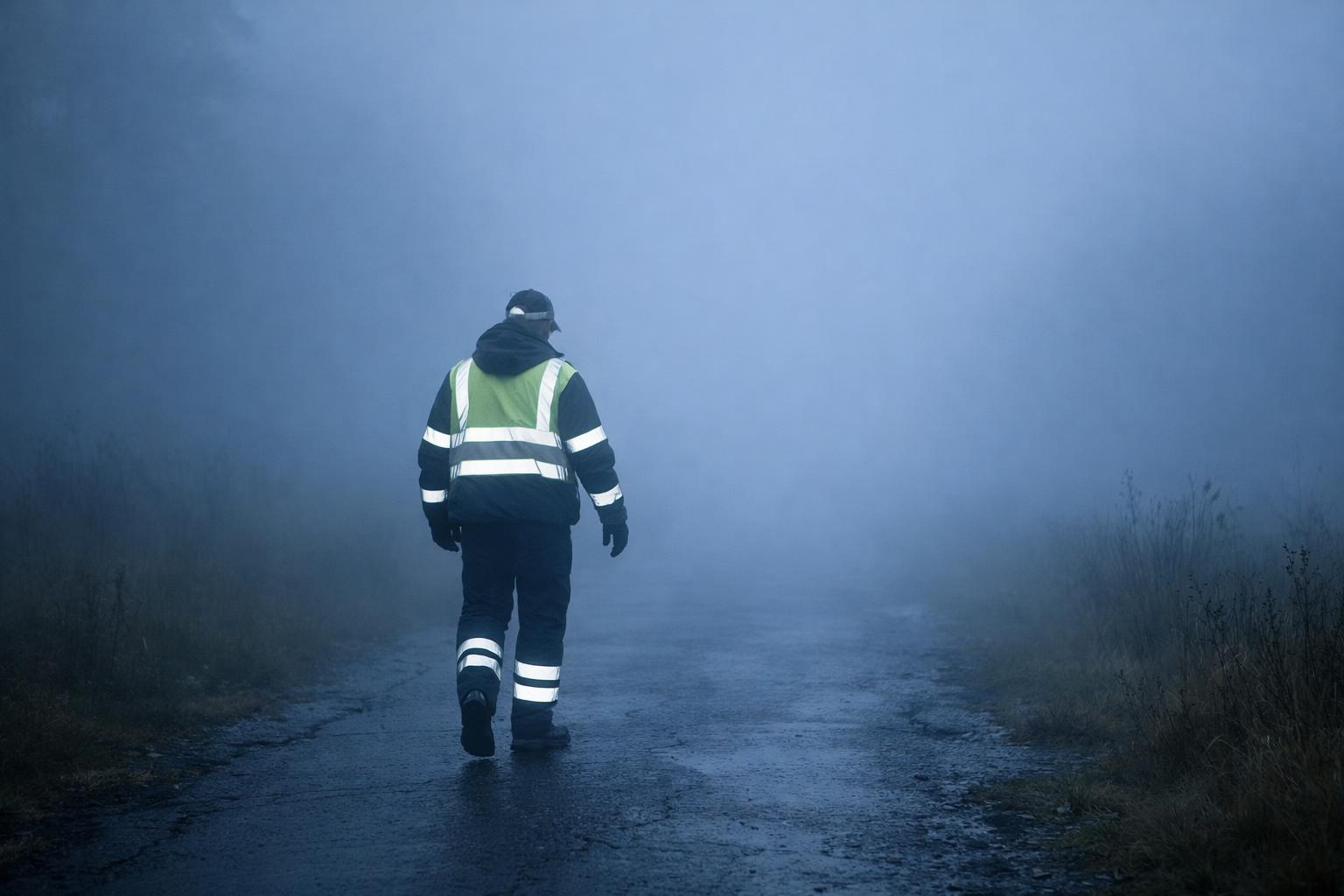
- Wearing high-visibility clothing with retroreflective tape appropriate to the work environment
- Using color-contrasting tape or paint to mark steps, leading edges, changes in levels, and obstacles
- Installing reflective markers, cones, or barricades to separate pedestrians and vehicles
- Marking designated walkways and crossing points through high-traffic areas
Ensure all high-visibility garments are clean and in good condition so reflective material can do its job. Replace faded or damaged items promptly.
Vehicle and Equipment Operations in Low Light
Operating vehicles and mobile equipment in low-light conditions introduces additional risk for drivers and pedestrians. Controls should include:
- Pre-use inspections of headlights, tail lights, brake lights, work lights, and warning beacons
- Clean lenses and mirrors to maximize visibility
- Use of spotters or signalers where sightlines are limited
- Reduced speed limits for low-light or high-pedestrian areas
- Clear right-of-way rules between vehicles and pedestrians
- Parking and staging areas that are well lit and clearly delineated
Pedestrians must stay within marked walkways and maintain eye contact with operators before crossing vehicle paths. Both drivers and walkers should avoid distractions such as mobile phones when visibility is already compromised.
Safe Use of Tools and Machinery
Low-light conditions can make it easy to misread measurements, cut lines, gauges, and warning labels. To work safely:
- Provide task lighting at benches, machines, and detailed workstations
- Ensure labels, switches, and emergency stop buttons are clearly marked and visible
- Avoid tasks requiring fine detail if adequate lighting cannot be provided
- Do not bypass machine guards or interlocks to “see better”
- Stop work and report if lighting fails or becomes inadequate during critical tasks
Where color coding is used, such as electrical wiring or piping, ensure lighting is sufficient to distinguish colors accurately.
Worker Fitness, Fatigue, and Eye Protection
Low-light work increases strain on the eyes and can accelerate fatigue. Workers should:
- Take regular short breaks to rest eyes from intense focus on dim or high-contrast areas
- Use prescription safety glasses if required and ensure lenses are clean
- Select the right lens tint for conditions; overly dark lenses can make low light even more hazardous
- Report headaches, eye strain, or visual difficulties promptly
Training should cover how low light affects depth perception, distance judgment, and reaction time, and how that connects to real tasks on site.
Simple Toolbox Talk Checklist for Low-Light Work
Before starting any task in low-light conditions, review:
- Is the area adequately illuminated for the work being done?
- Are access, egress, and emergency routes clearly visible and marked?
- Are mobile plant, vehicles, and pedestrians separated and easily seen?
- Are temporary lights stable, correctly positioned, and free of damage?
- Are cables, cords, and hoses routed to avoid trip hazards?
- Is high-visibility clothing appropriate, clean, and in good condition?
- Are tools, machines, and emergency stops clearly visible and labeled?
- Do workers understand how to stop work and report if lighting degrades?
When lighting changes suddenly due to weather, power loss, or time of day, pause, reassess, and adjust the work plan before continuing. Maintaining a strong safety culture around low-light work means workers feel empowered to speak up the moment visibility becomes a concern.