Training Records & Retraining Cycles: How to Stay Ready Without Drowning in Paperwork

Four business professionals in suits sit at a table, smiling and pointing at a clipboard with a checklist, showing completed tasks. An open notebook with training records is on the table beside them.

Safety training is only as strong as the records that prove it happened—and show when it needs to happen again. Many organizations still rely on spreadsheets, filing cabinets, or a mix of paper and digital files. That approach makes it easy to miss retraining cycles, lose track of expired certifications, and struggle during audits. Effective […]

OSHA 300/300A: What Employers Need to Know

Four business professionals in suits gather around a corkboard as one man pins up an OSHA 300A notice while others listen and take notes, suggesting a discussion on employer requirements and workplace safety compliance.

Posting, Timing, and Common Mistakes Understanding OSHA 300 and 300A recordkeeping and posting rules is essential for employers that fall under federal OSHA jurisdiction. These forms are not just paperwork; they are legal records of work-related injuries and illnesses and are a key part of your overall safety and compliance program. Failing to complete, retain, […]

Training Records & Retraining Cycles: How to Stay Ready Without Drowning in Paperwork

Three people sit at a desk with digital devices and documents, collaborating in an office setting. Charts, graphs, and training records are visible on the table, with digital icons overlaying the image to suggest data analysis or teamwork.

Safety training is only as strong as the records that prove it happened—and show when it needs to happen again. Many organizations still rely on spreadsheets, filing cabinets, or a mix of paper and digital files. That approach makes it easy to miss retraining cycles, lose track of expired certifications, and struggle during audits. Effective […]

The Annual Safety Calendar: The Deadlines, Reviews, and Reminders That Keep You Compliant

Five colleagues in business attire smile and discuss a large safety calendar on a desk, which also holds yellow and white safety helmets, a book labeled "SME," and sticky notes, highlighting their focus on meeting safety deadlines in a bright office setting.

A structured annual safety calendar is one of the simplest, most reliable ways to stay compliant and reduce risk. Instead of scrambling before audits or after an incident, a calendar turns safety into a planned, proactive system. For many organizations, this is the difference between consistent compliance and recurring fines, delays, and injuries. An annual […]

Opening a New Facility? The Safety Documentation You’ll Wish You Had on Day One

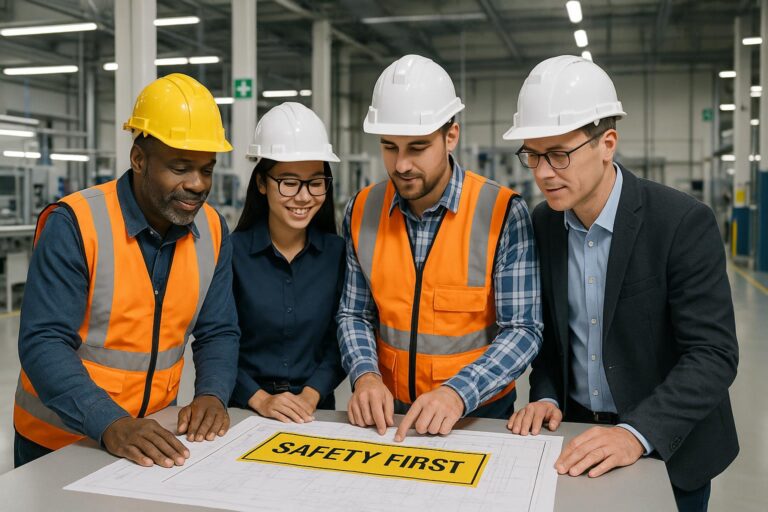
Four workers wearing hard hats and safety vests review safety documentation on a table with a “SAFETY FIRST” sign in a large industrial warehouse, emphasizing workplace safety procedures when opening a new facility.

Opening a new facility is exciting, but it also creates a critical window of risk. Before the first employee walks through the door, you need safety documentation that is clear, accessible, and tailored to your operations. Missing even one key document can lead to confusion, unsafe shortcuts, regulatory issues, and costly downtime. Treat safety paperwork […]

Conducting A PPE Audit: Finding Safety Gaps

Two male workers in yellow reflective vests, safety helmets, and gloves stand indoors—one with a clipboard, the other adjusting his helmet—conducting a PPE safety inspection. Industrial equipment is visible in the background.

Introduction Personal Protective Equipment (PPE) is a critical component of workplace safety. However, simply providing PPE is not enough. Regular PPE audits are essential to ensure that equipment is available, suitable, and used correctly. Conducting a PPE audit helps organizations identify safety gaps, reduce workplace injuries, and maintain compliance with safety regulations. This toolbox talk […]

Working With Lead and Handling Lead Safely

A person wearing a white hard hat and a gray and red work uniform stands confidently with arms crossed in an industrial setting. As the working lead, they're also donning a protective face mask amidst the background of machinery and equipment.

There is no cure for lead poisoning or the permanent damage it may cause. Even in the form of lead dust, it can gather on your clothing and skin. If it’s inhaled or ingested, it can cause serious damage to the lungs, kidneys, nervous system, intestines, and reproductive system. Lead is an extremely toxic substance […]

Stay Safe When Working With Flavorings

A person wearing a white lab coat, blue hairnet, and white gloves is inspecting and taking notes on a clipboard next to a conveyor belt filled with pasta in a food processing facility, ensuring the addition of safe flavorings.

As a manufacturer of food products, it’s important to stay safe because you can come into contact with many different ingredients and flavorings. Even though some chemicals you work with are safe to eat, they can cause eye, lung, or skin disease if you are not properly protected while you are touching or working around […]

our Guide to Maintaining Fall Protection Equipment

A man with grey hair and a beard, wearing glasses and a white face mask, is pictured in an indoor industrial setting. He is dressed in a yellow safety vest over a light blue shirt, holding an ID card on a blue lanyard around his neck, possibly working with acetone.

A walk through other areas of the workplace is a common occurrence, but it can also be dangerous if you don’t stay alert. This is particularly true for employees leaving their old, familiar departments and moving into a new work environment.    New employees receive instructions regarding training and safety precautions. However, when transitioning roles to […]

Conveyor Belts: Safe Use

A close-up view of conveyor belts in an industrial factory setting, with machinery and production equipment visible in the background. The conveyor swiftly transports a small object, while the surrounding area is illuminated with industrial lighting.

Unnecessary workplace accidents can occur when employees do not think before they act or avoid taking precautions to prevent accidents. Keeping safety top of mind is especially important when working with potentially dangerous machinery like conveyor belts. In fact, the Occupational Safety and Health Administration frequently cites conveyor belt accidents as one of the top […]