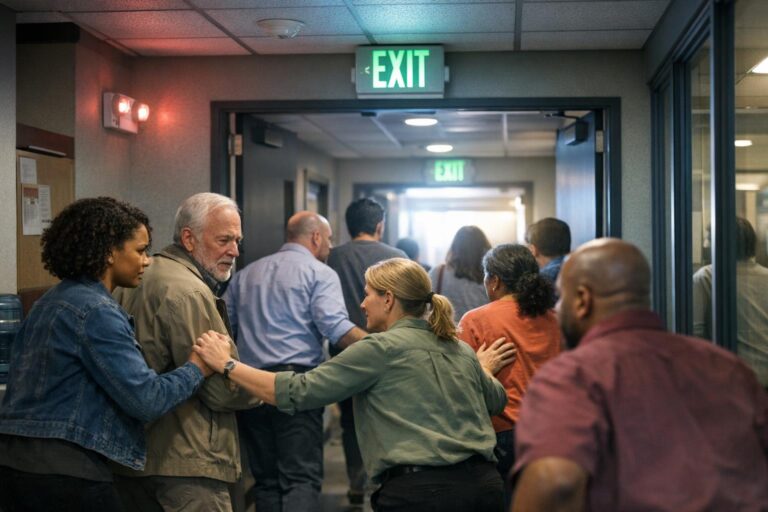
Safety performance is no longer a “nice to have” for facilities; it is a core business requirement. Whether you run a manufacturing plant, warehouse, construction operation, or logistics hub, you need the right safety leadership model to reduce risk, avoid regulatory penalties, and protect your workforce.
Many organizations are now weighing the benefits of fractional safety support versus hiring a full-time safety professional. Each model can work extremely well when matched correctly to your facility’s size, risk profile, and growth stage. The key is to understand what you actually need, when you need it, and how each option impacts cost, compliance, and culture.
Why your facility’s safety model matters
Workplace incidents carry direct and indirect costs that go far beyond insurance premiums. The U.S. National Safety Council estimates the total cost of work-related injuries in 2022 at $167 billion, including wage and productivity losses, medical expenses, and administrative costs.
Source
OSHA penalties are also rising. As of early 2024, the maximum penalty for serious or other-than-serious violations is over $16,000 per violation, while willful or repeat violations can exceed $161,000 per violation.
Source
The right safety leadership model helps your facility:
- Reduce recordable incidents and lost-time injuries
- Maintain compliance with OSHA and other regulators
- Lower total cost of risk and avoid expensive disruptions
- Improve employee engagement and retention
- Build a proactive safety culture rather than reacting to incidents
Understanding fractional safety
Fractional safety is a model where your organization engages an experienced safety professional or safety consultancy for a defined number of hours or days per month, rather than employing them as full-time staff. This arrangement is similar to fractional CFOs or fractional HR leaders used by many small to mid-sized businesses.
Key characteristics of fractional safety support:
- Part-time engagement based on a fixed scope or retainer
- Access to senior-level expertise that may be cost-prohibitive full-time
- Flexibility to scale hours up or down as your facility’s needs change
- Often provided by a consultant or firm with multi-industry experience
Typical responsibilities of a fractional safety professional include:
- Conducting facility risk assessments and job hazard analyses
- Developing and updating written safety programs and procedures
- Leading training, toolbox talks, and safety coaching for supervisors
- Supporting incident investigations and root cause analysis
- Performing periodic audits and compliance checks
- Advising leadership on strategy, metrics, and improvement plans
When fractional safety is a strong choice
Fractional safety can be particularly effective for:
- Small to mid-sized facilities
Operations with fewer employees, limited budget, or relatively lower inherent risk may not justify a full-time safety position, but they still need competent safety leadership and compliance oversight. Fractional support delivers that leadership without carrying a full-time salary, benefits, and overhead. - Facilities building or formalizing a safety program
If your organization is transitioning from basic compliance toward a structured safety management system, a fractional safety leader can design the framework, implement core processes, and train your internal team to own day-to-day tasks. - Multi-site operations needing standardized practices
Companies that operate several smaller facilities often struggle with inconsistent safety practices. A fractional safety professional can create standardized programs and rotate across sites to audit, train, and coach local leaders. - Specialized or project-based needs
Construction projects, facility expansions, or high-risk process changes may require elevated safety focus for a defined period. Fractional arrangements can provide targeted expertise during these phases without permanent headcount.
Understanding full-time safety professionals
A full-time safety manager or safety director is a dedicated employee whose primary responsibility is the safety and health of your workforce and compliance of your operations.
Key characteristics of a full-time safety role:
- On-site presence during regular operations (and often on-call)
- Deep familiarity with your specific processes, people, and culture
- Continuous oversight of daily activities and emerging risks
- Direct integration with operations, HR, maintenance, and leadership teams
Typical responsibilities of a full-time safety professional include:
- Daily safety walks and near-miss follow-up
- Managing safety committees and employee involvement programs
- Continuous training, coaching, and onboarding of new hires
- Detailed incident tracking, data analysis, and trend reporting
- Leading corrective and preventive action implementation
- Coordinating industrial hygiene, ergonomics, and occupational health initiatives
When full-time safety is the better fit
Full-time safety is often the right choice when:
- Your facility has higher inherent risk
Manufacturing with heavy machinery, confined spaces, high-voltage equipment, hazardous chemicals, or complex logistics usually benefits from a dedicated, on-site safety professional. The continuous risk profile justifies full-time oversight. - You have a larger workforce
Facilities with higher headcount create more exposure hours, more training needs, and more daily safety interactions. A full-time leader is better positioned to stay ahead of training requirements, inspections, and employee engagement. - You are operating under strict customer or regulatory requirements
Industries such as oil and gas, pharmaceuticals, food and beverage, and healthcare often have stringent safety and compliance expectations. A full-time safety role can manage certifications, audits, and documentation at the level your customers and regulators require. - You are building a deeply embedded safety culture
If your strategic goal is to make safety a visible, lived value at every level, a full-time safety professional working closely with supervisors and frontline staff accelerates that culture shift.
Fractional vs. full-time safety: key decision factors
To choose the right model for your facility, consider these core factors:
- Risk profile
- High-risk operations: Lean toward full-time safety, possibly supported by occasional external specialists.
- Moderate or lower-risk operations: Fractional safety may provide sufficient leadership, especially when paired with strong supervisor accountability.
- Budget and total cost of risk
- Fractional safety usually offers lower direct cost and high expertise density, ideal when budgets are constrained.
- Full-time safety adds salary and benefits but may reduce incident rates, claims, and downtime, improving your long-term total cost of risk.
- Internal capabilities
- If supervisors and managers are trained and accountable for daily safety tasks, a fractional leader can design the system and audit performance.
- If your team lacks safety experience, a full-time professional can provide continuous coaching and oversight until capability is built.
- Growth stage and future plans
- Rapidly growing organizations may start with fractional safety and transition to full-time as headcount and complexity increase.
- Larger, stable facilities may justify full-time safety now, supplemented with fractional consulting during major projects or strategic shifts.
Hybrid approaches: combining fractional and full-time safety
Many organizations find success with a hybrid model:
- A full-time safety coordinator or manager handles daily activities, observations, and training.
- A fractional senior safety consultant provides strategic direction, periodic audits, and specialized expertise, ensuring the in-house team stays aligned with evolving standards and best practices.
This combination can be especially powerful for organizations that want robust, day-to-day coverage plus access to higher-level strategic guidance without adding another senior full-time role.
How to move forward for your facility
Start by objectively assessing your incident history, regulatory exposure, operational risk, and internal capabilities. Map those realities against the models above, focusing on what will:
- Most effectively protect your people
- Reduce incidents and regulatory exposure
- Fit your current and projected budget
- Support your long-term safety culture goals
Choosing between fractional and full-time safety is not a one-time, permanent decision. As your facility grows and your risk profile changes, revisit your model and adjust to ensure your safety leadership structure continues to match the reality on your floor.
Not sure fractional support fits your situation yet? Start with what fractional safety is and who it’s for, or if audits and citations are the immediate pressure, our compliance and auditing services can help you close the gap either model would eventually need to address.
Running construction projects? Our fractional safety support for construction contractors covers jobsite safety plans, audits and on-site training.