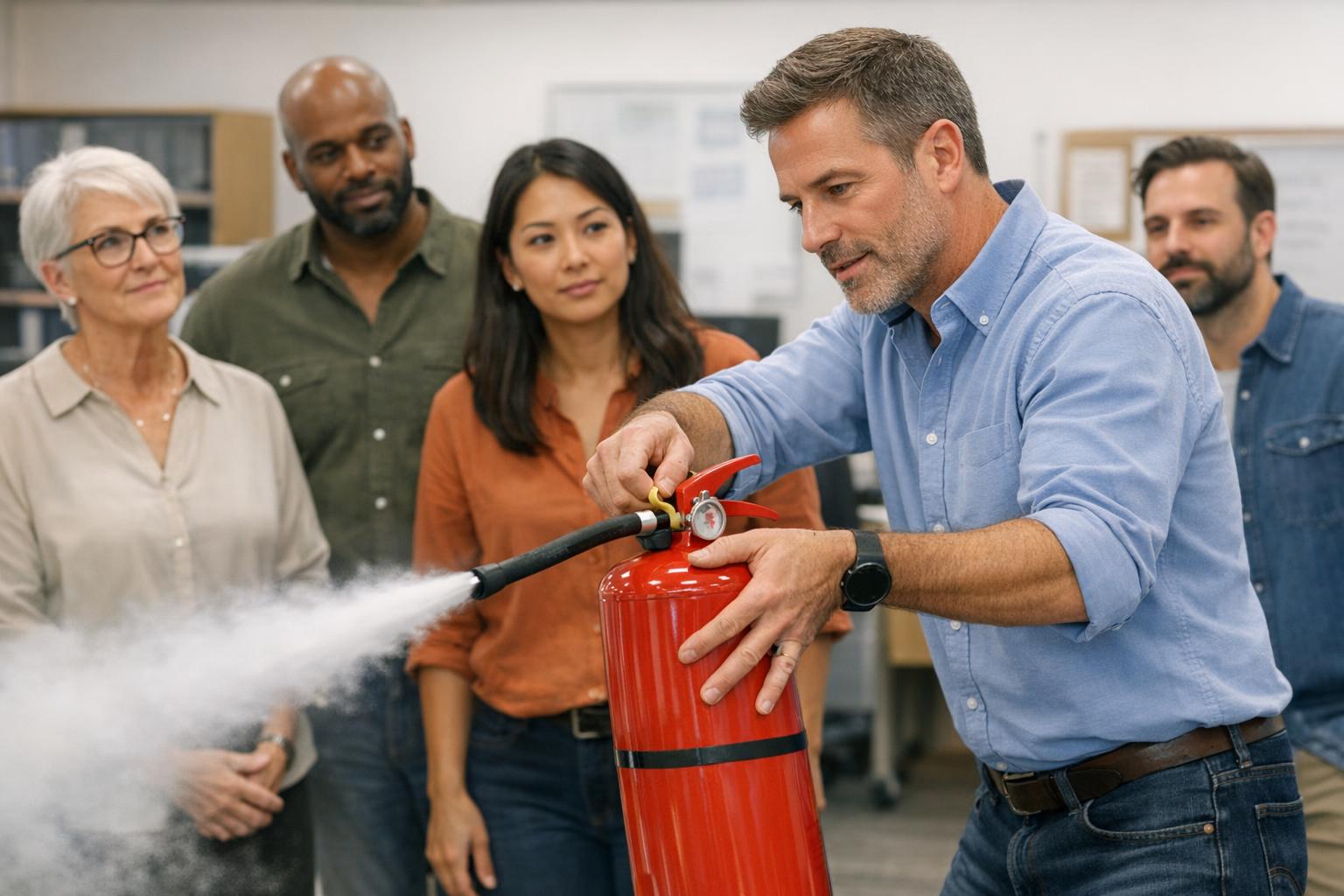
Every serious incident has a backstory. Often, it is a loose guard that nobody tightened, a frayed cord that “still worked,” or a missing fire extinguisher tag that never got noticed. Monthly safety inspections create a simple, repeatable rhythm that catches those problems before they turn into injuries, downtime, or regulatory violations.
Consistent inspections are not about finding someone to blame. They are about seeing the workplace clearly, fixing hazards early, and giving people confidence that the environment they work in every day is being actively cared for. When they are done well and done regularly, monthly inspections stop “surprises” from ever reaching the production floor or job site.
Why monthly safety inspections matter
Many hazards develop slowly. Guards work loose, emergency lighting batteries drain, and housekeeping standards slip under production pressure. A monthly safety inspection schedule keeps you close enough to the work to see these trends before they become an incident.
Regulators expect a structured approach, too. OSHA requires employers to provide a workplace “free from recognized hazards” and to inspect and maintain equipment safely. For example, OSHA’s standards for powered industrial trucks require that forklifts be examined before being placed in service and not used if unsafe. A documented monthly safety inspection program supports this obligation and shows you are actively managing risk.
Beyond compliance, the business case is clear. Fewer surprises mean:
- Less unplanned downtime due to equipment failure
- Fewer recordable incidents and associated costs
- Higher confidence from customers, auditors, and insurers
- A more engaged workforce that can see issues being fixed
Turning inspections into a predictable safety rhythm
The power of monthly inspections is not in a single, massive audit. It is in the routine. The key is to create a simple, repeatable process that people can actually sustain.
Focus your monthly safety inspections on:
- Work areas and housekeeping
- Tools, machines, and mobile equipment
- Electrical and fire protection systems
- Emergency equipment and exits
- PPE availability and condition
- Documentation and signage
Use a standardized checklist for each area or department so nothing is missed and data can be compared month to month.
Core elements of an effective monthly safety inspection
1. Clear scope and ownership
Assign a responsible person for each area: a supervisor, working lead, or safety committee member. Make that responsibility part of their role, not a “nice to have.” Define which spaces they inspect, such as production lines, warehouse zones, offices, or remote work locations.
2. Standardized monthly safety inspection checklist
A consistent checklist keeps inspections focused and repeatable. Typical sections include:
- Housekeeping and walkways: Floors clear of debris, cords, and spills; aisles and exits unobstructed; materials stored safely.
- Machine and tool safety: Guards in place, emergency stops functioning, lockout/tagout points labeled, tools in good condition.
- Fire safety: Extinguishers accessible and inspected, clear access to fire doors, no blocked sprinklers, flammable storage correct.
- Electrical safety: No damaged cords, no daisy-chained power strips, panels accessible with required clearance.
- PPE and signage: Proper PPE available, stored correctly, and in good condition; safety signs visible and legible.
- Ergonomics and manual handling: Work heights reasonable, lifting aids available, materials stored to reduce strain.
- Administrative controls: Required postings up to date, permits current, inspections logged.
3. Simple, consistent schedule
Tie inspections to a fixed, recurring event. For example:
- First full week of each month for all areas
- Specific day (e.g., first Wednesday) by area or department
- A standard time window when production impact is lowest
4. Documentation and follow-up, not “paper only”
Inspection forms are only useful if findings are acted on. For each issue, capture:
- What was found and exact location
- Risk level (high, medium, low)
- Responsible person and target completion date
- Actual completion date
Integrate corrective actions into your existing work order or maintenance system so they compete fairly with other priorities.
5. Worker involvement during the inspection
Monthly safety inspections are an opportunity to listen. Walk the area with a worker and ask:
- “What has almost caused a problem here recently?”
- “What do you have to ‘work around’ to get the job done?”
- “What feels less safe at the end of the month than at the beginning?”
Reducing “surprise” problems with leading indicators
Incident reports and injury logs are lagging indicators; they tell you what already went wrong. A monthly safety inspection program turns your attention toward leading indicators you can act on early. Examples include:
- Number of open high-risk findings
- Average days to close corrective actions
- Repeat hazards found in the same area
- Percentage of inspections completed on schedule
Practical tips to keep monthly inspections sustainable
- Keep it short: A 20–30 minute targeted review is easier to maintain than a marathon session.
- Train inspectors: Ensure anyone doing inspections understands what “good” looks like.
- Use photos: Document issues to show before/after improvements.
- Share results: Let the whole team see the visible results from raising concerns.
- Rotate eyes: Change who participates in walkthroughs to spot issues others may have stopped noticing.
Building a culture that expects issues to be found
A healthy safety culture does not hide hazards; it expects to find them and fix them. Monthly safety inspections reinforce the message that finding issues is positive and small, repeated corrections are better than reactive overhauls.
Using monthly safety inspections as a training moment
Each inspection is also a chance to reinforce safe work practices. When you find an issue, use it as a quick coaching moment to demonstrate the correct setup and explain the “why” behind the requirement.
Linking inspections to continuous improvement
Trends in repeated hazards point to deeper system problems: layout, workflow, staffing levels, or maintenance planning. Use your findings to justify upgrades, adjust storage, or refine training materials.
Monthly safety inspections are not just a form to fill out; they are a simple, steady rhythm that prevents “surprise” problems from ever reaching your people or your business.
Reference links: