Provided by: Three Sixty Safety
Lathe Safety
Just because a piece of equipment is frequently used doesn’t mean that it’s okay to be careless in how you handle and operate it.
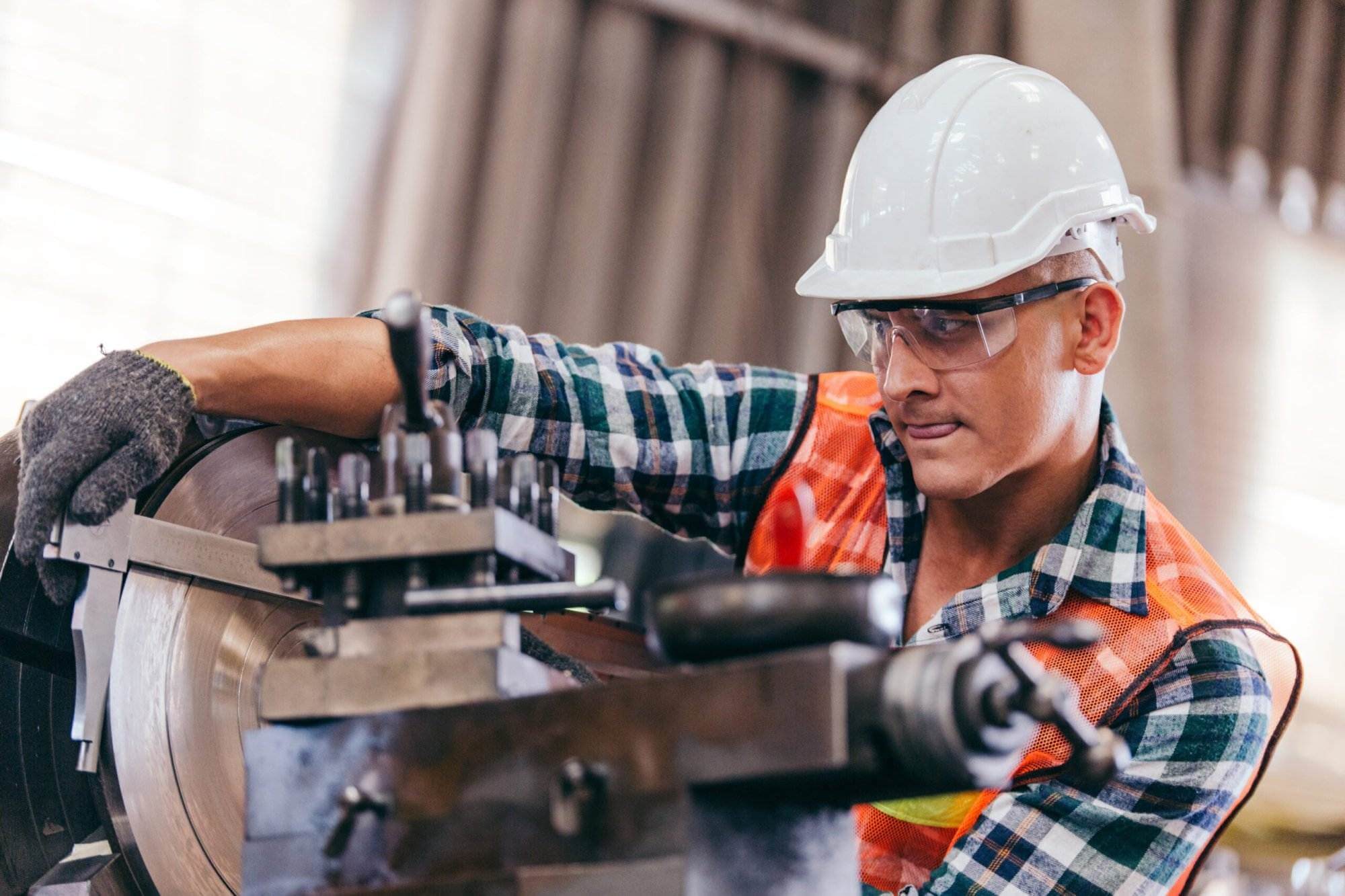
Lathes are often used in many different types of manufacturing for both production and maintenance, but these machines and their moving parts are serious hazards. Keep reading for more information on lathe safety.
Entanglement
One of the primary hazards when it comes to using lathes is entanglement. The equipment has several different possible risk areas including the spinning chuck and the rotating stock, which can easily grab or trap clothing, jewelry, hair and even your hands.
Follow these tips to avoid entanglement accidents:
- Guard or shield the spinning chuck as much as possible while operating a lathe.
- Use clear guards so that you can still observe the machine.
- Avoid loose-fitting clothing and jewelry, and tie your hair back or up to keep it away from rotating parts.
Ejected Material
Rotating pieces in lathes can grab and latch onto things, causing entanglement, but the speed of the rotation also creates significant force that can result in projectiles being flung out at dangerous speeds. These projectiles could be part of the lathe itself or even a cutting tool.
To prevent an injury involving ejected material, follow these tips:
- Make sure tools are being used and adjusted properly.
- Hold hand-held tools firmly.
- Make sure that guards and shields are in place.
- If turning wood, make sure that the piece is not damaged and be certain that any glued joints are dry.
Chips
As lathes cut and shape your material, it is possible that chips of the material will be thrown off. Avoid suffering an injury from these chips with the following tips:
- Wear appropriate personal protective equipment (PPE) for your eyes.
- Practice good housekeeping, and clean chips off of the floor so that they do not become a slip hazard.
- Make sure that guards and shields are in place.
General Safety Tips
Lathes are useful equipment for employees in the manufacturing industry, but it is extremely important that employees take necessary precautions when using them in order to prevent workplace injuries and accidents. Other tips for ensuring safe lathe use include:
- Make sure that the start and stop button for the lathe is within comfortable reach of the operator.
- Check that there is a working emergency stop button.
- Maintain sharpness of all lathe cutting tools.
- Keep the working surface and the floor around the lathe clean.
There are also a number of bad habits that employees using a lathe should avoid:
- Do not lean on the machine.
- Wait to make any adjustments until the lathe has come to a complete stop.
- Do not place hands on work turning in the machine.
- Avoid using calipers or gauges on a piece while the lathe is running.
- Do not make heavy cuts on long, thin pieces of material, as this could cause it to bend and be flung from the machine.
- Never leave a running lathe unattended.
The safety of our employees is one of our highest priorities. Talk to your supervisor if you have any questions about lathes.
This Safety Matters flyer is for general informational purposes only, and is not intended as medical or legal advice.