Why Safety Programs Fail Under Real Production Pressure
Safety programs often look strong on paper yet fail the moment real production pressure hits. Tight deadlines, customer demands, and unexpected issues expose weaknesses in planning, leadership, and culture. When output becomes the only priority, risk rises, shortcuts appear, and incidents follow. Understanding how safety programs fail under pressure is essential to building systems that stand up in real-world conditions.
Safety vs. Production: Competing Priorities
Many organizations still treat safety and production as competing goals. Under pressure, supervisors may quietly prioritize meeting the schedule over following safe work procedures. Workers quickly learn what “really matters” by observing which metrics leaders talk about, reward, and punish. If on-time delivery is celebrated and safety is only discussed after an incident, the true priority is clear. This misalignment between stated values and daily behavior is one of the fastest ways safety programs fail.
Ideal Procedures vs. Real-World Work
A common problem is that safety rules are written for an ideal world, not for the messy reality of a busy shift. Procedures often assume unlimited time, full staffing, and perfect equipment condition. Under production pressure, those assumptions collapse. Crews are asked to “get it done anyway,” which often leads to improvising, bypassing safeguards, or rushing critical steps. When work-as-imagined in the procedure does not match work-as-done on the floor, people are pushed into a choice between doing it “right” and doing it “fast.”
The Pitfall of Paperwork
Another frequent failure is the over-reliance on paperwork. Checklists, permits, and forms can help structure good work, but they are not safety by themselves. Under deadline pressure, paperwork can turn into a “tick-the-box” exercise just to satisfy audits and clients. Workers may sign off on pre-start checks without properly inspecting equipment, or complete job safety analyses that are copied from previous tasks without genuine discussion. This creates a dangerous illusion of control: the documents show compliance, but the real hazards remain unmanaged.
Leadership Behavior Under Pressure
Leadership behavior under pressure is one of the strongest indicators of whether a safety program will hold. When things get tight, some leaders send mixed messages: “Be safe, but we must ship this order today no matter what.” That “no matter what” is exactly where safety programs begin to fail. If supervisors turn a blind eye to unsafe shortcuts because “we need to get through this week,” they quietly reset the standards. Once workers see unsafe behavior rewarded with praise for productivity, it becomes the new normal.
Communication Breakdowns
Communication also tends to break down when workloads spike. Critical information about changing conditions, new tasks, or emerging hazards may not get passed along clearly. Short, pressured handovers between shifts mean people start work without fully understanding risks. Briefings and toolbox talks get rushed or skipped. When teams are not aligned on what has changed—new equipment, different materials, modified layouts—existing safety controls may no longer be appropriate or sufficient.
Unrealistic Production Planning
A recurring weakness is failing to plan production realistically with safety constraints in mind. Schedules are often built assuming ideal conditions: no rework, no equipment breakdown, no staff absences, and no delays in material supply. As soon as anything goes wrong, the schedule is already behind, and pressure rises. Without built-in resilience—such as buffer time, cross-trained staff, and contingency plans—organizations are almost guaranteed to push people into riskier behavior just to recover lost time.
Training That Fails Under Stress
Training is another area that often shows its true quality only when pressure mounts. If training is primarily classroom-based, generic, or one-time only, workers may not have the practical skills to adapt safely when conditions change. Under stress, people fallback to habits, not manuals. If those habits were never built around safe procedures in realistic conditions, workers are more likely to improvise in unsafe ways. Strong safety programs emphasize hands-on practice, scenario-based training, and refreshers that reflect real production demands.
Metrics That Drive the Wrong Behavior
Metrics can unintentionally drive failure. When leaders focus mainly on lagging indicators, such as recordable injuries or lost time incidents, they may discourage reporting and hide the real level of risk. Under pressure to “stay at zero,” workers may avoid reporting near misses, minor injuries, or unsafe conditions, fearing blame or delays. This removes the organization’s early warning system. Effective programs use more leading indicators, such as quality of pre-job planning, participation in hazard reporting, and closure rates on corrective actions.
Fatigue and Staffing Pressures
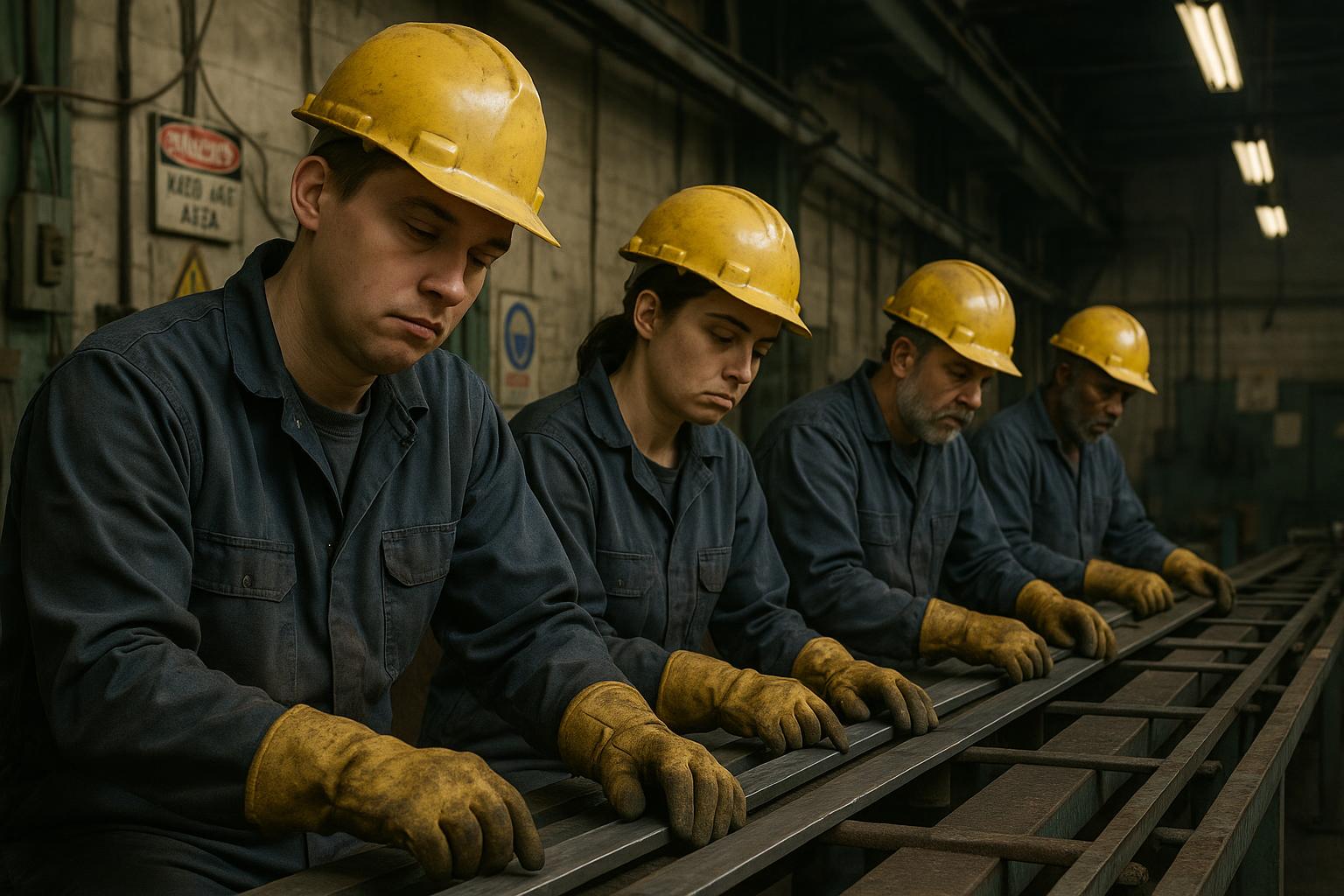
Fatigue and staffing pressures are major contributors to safety breakdowns. To meet urgent orders, organizations may extend shifts, reduce breaks, or rely heavily on overtime. Fatigued workers are more likely to make errors, miss warning signs, and rely on shortcuts. Research has consistently linked long working hours with increased incident risk. For example, a review in the American Journal of Industrial Medicine found that working more than 12 hours per day was associated with a higher risk of occupational injury, and working more than 60 hours per week carried an even greater risk (source). When safety programs do not place firm boundaries around hours, rest, and staffing levels, pressure turns directly into risk.
Contractor and Temporary Worker Risks
Contractors and temporary workers are also vulnerable points. Under production pressure, organizations may bring in additional labor quickly, but fail to integrate these people fully into the safety system. Incomplete inductions, rushed site orientations, and limited supervision can leave contractors unaware of critical hazards and controls. If they are held to aggressive productivity expectations without equal emphasis on safety, they may unknowingly create or face higher risks than permanent staff.
Over-Focus on PPE and Behavior
Another way safety programs fail is by focusing almost exclusively on personal protective equipment and individual behavior, while neglecting engineering and organizational controls. Under pressure, PPE and “be careful” messages are often the easiest and fastest tools to deploy. However, when machine guarding, layout design, maintenance standards, and automation opportunities are underdeveloped, workers are left to manage risk with last-line defenses only. Robust safety programs prioritize designing risk out of the job, so that when pressure increases, the basic system remains safe by design.
Shallow Incident Investigations
Incident investigations provide a clear view of whether a safety program learns from failure or simply assigns blame. Under pressure from clients, regulators, or senior leadership, some organizations rush to find a “root cause” focused on worker error and move on. This misses deeper systemic contributors such as unrealistic timelines, inadequate tools, conflicting KPIs, or poor supervision. Over time, repeating the same shallow investigations leads to repeating the same types of incidents, especially when the system is stressed.
The Culture of Speaking Up
Finally, the culture around speaking up is decisive. In a truly resilient safety program, people feel able to stop work, challenge unsafe instructions, and escalate concerns without retaliation. Under real production pressure, this is tested: does the organization genuinely support a stop-work authority, or does it quietly punish it through lost opportunities, criticism, or social pressure from coworkers? When workers see colleagues sidelined or criticized for raising concerns, they quickly learn to stay silent. Silence under pressure is where serious incidents grow.
Building Resilient Safety Programs
Building safety programs that do not fail under real production pressure requires aligning incentives, designing realistic work processes, and leading consistently through stress. Safety must be built into planning, resourcing, and metrics, not added on after the schedule is set. When pressure rises, organizations either default to their true priorities or demonstrate that safe production—not production at any cost—is non-negotiable.
Reference Link:
Long working hours and risk of occupational injury