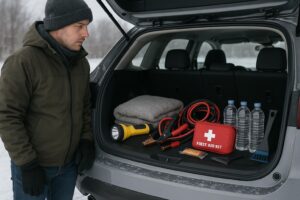
Winter brings unique challenges to both drivers and workers on jobsites. Snow, ice, and freezing temperatures can create hazardous conditions, making it essential to be prepared for emergencies. A well-stocked winter emergency kit can make the difference between a minor inconvenience and a life-threatening situation. In this toolbox talk, we’ll break down the anatomy of a winter emergency kit, highlighting what every vehicle and worksite should have to ensure safety and preparedness.
Why a Winter Emergency Kit is Essential
According to the U.S. Department of Transportation, over 1,300 people are killed and more than 116,800 are injured in vehicle crashes on snowy, slushy, or icy pavement annually. Worksites are also at risk, as cold stress, frostbite, and hypothermia can occur quickly in low temperatures. Having a winter emergency kit is a proactive step to protect yourself, your team, and your family.
Key Components of a Winter Emergency Kit
-
Warm Clothing and Blankets
- Insulated gloves and hats
- Thermal socks
- Extra layers of clothing
- Wool or thermal blankets
- Emergency space blankets
-
Food and Water
- Bottled water (at least one gallon per person)
- High-energy, non-perishable snacks (granola bars, nuts, dried fruit)
- Electrolyte packets
-
First Aid Supplies
- Comprehensive first aid kit
- Antiseptic wipes
- Bandages and gauze
- Pain relievers
- Scissors and tweezers
-
Tools and Equipment
- Flashlight with extra batteries
- Multi-tool or Swiss Army knife
- Jumper cables
- Ice scraper and snow brush
- Small shovel
- Traction aids (sand, cat litter, or traction mats)
- Duct tape
-
Communication and Signaling Devices
- Fully charged power bank for cell phones
- Whistle
- Reflective triangles or road flares
- High-visibility vest
-
Personal Hygiene and Comfort Items
- Hand warmers
- Moist towelettes
- Toilet paper
- Personal medications
-
Worksite-Specific Items
- Portable heater (battery or propane-powered, with proper ventilation)
- Extra PPE (personal protective equipment) for cold weather
- Site maps and emergency contact lists
- Two-way radios
How to Store and Maintain Your Kit
- Store your kit in an easily accessible location, such as the trunk of your vehicle or a central spot on the worksite.
- Check your kit at the start of each winter season. Replace expired food, water, and batteries.
- Train your team or family on how to use each item in the kit.
Tips for Using Your Winter Emergency Kit
- If stranded in a vehicle, stay inside unless help is visible within 100 yards.
- Run the engine for 10 minutes each hour for warmth, but ensure the exhaust pipe is clear of snow.
- Use reflective triangles or flares to make your location visible to rescuers.
- On worksites, establish a check-in system during severe weather to ensure everyone’s safety.
Legal and Regulatory Considerations
OSHA requires employers to provide a safe workplace, which includes preparing for winter hazards. While not all items are mandated, having a winter emergency kit demonstrates due diligence and care for worker safety.
Conclusion
A winter emergency kit is a critical component of vehicle and worksite safety. By preparing in advance, you can reduce risks, respond effectively to emergencies, and protect lives. Review your kit today and make sure you’re ready for whatever winter brings.