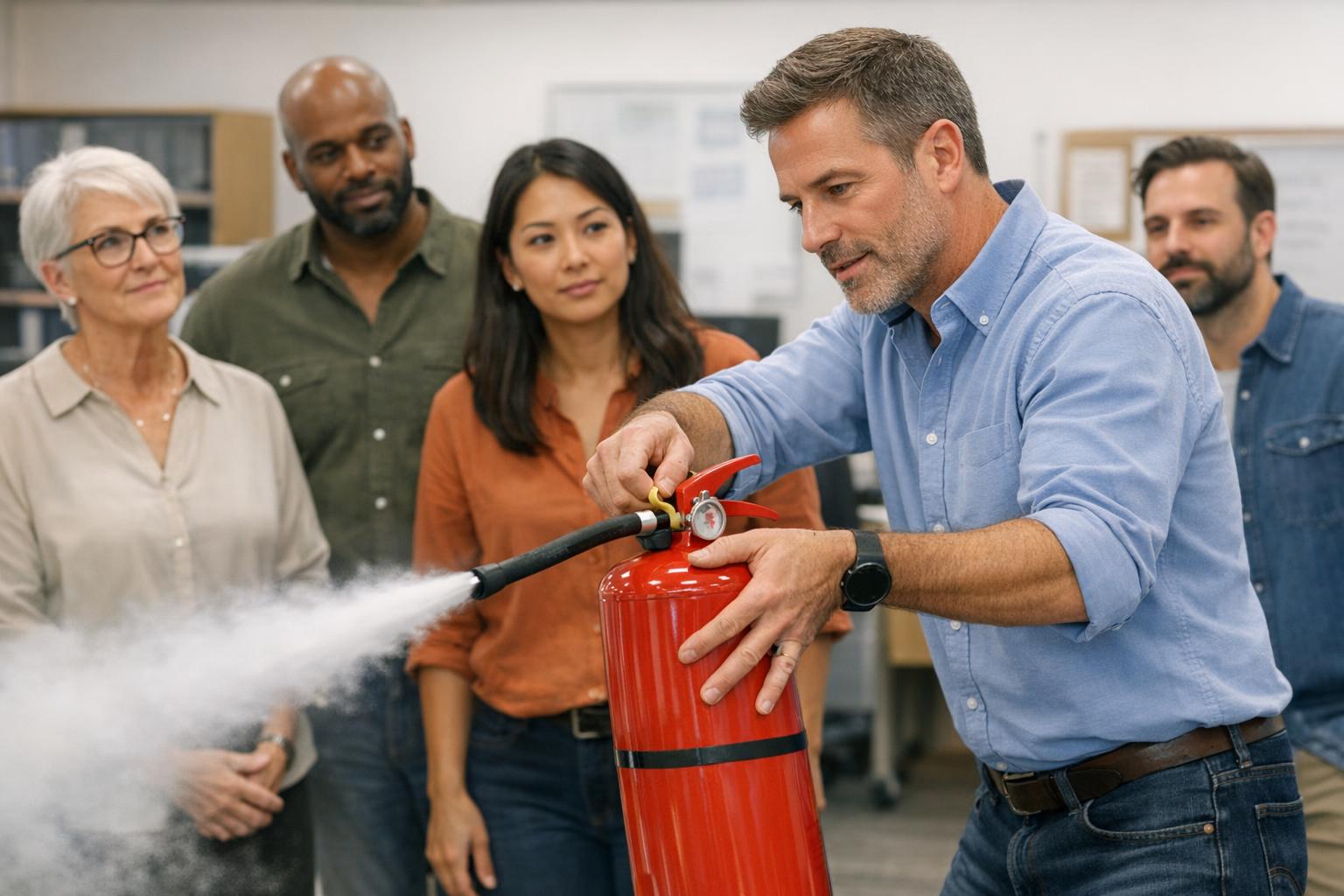
Expanding into a new location is an exciting sign of growth, but it also brings a different kind of responsibility: new safety risks and new legal obligations. Treating every new site as “same as the last one” is one of the fastest ways for hazards to slip through and for compliance gaps to appear.
Whether you are opening a second warehouse, adding a new office, or acquiring a facility in another state or country, you must treat each location as a fresh risk landscape. Layout, processes, local laws, workforce mix, and even weather patterns all influence how you manage safety and what the law expects you to do.
Why expansion changes your safety obligations
When you move into a new location, you are not just copying and pasting your old operation. You are changing the physical environment, the people involved, and often the regulatory framework around you. That is why regulators increasingly expect organizations to show that they have assessed and controlled risk for each specific site, not just at corporate level.
According to the International Labour Organization, an estimated 2.78 million workers die each year from work-related accidents and diseases, with an additional 374 million non-fatal work-related injuries and illnesses annually. These incidents cost an estimated 3.94% of global GDP every year. These numbers highlight that risk is not theoretical and that gaps in your safety management system can quickly become costly in human and financial terms.
Key ways a new location changes your risk profile
No two sites are the same, even if they share the same function. When you add, lease, or acquire a location, several changes affect safety:
Different building design and infrastructure
The configuration of stairways, exits, loading docks, lighting, ventilation, ceiling height, and floor condition all influence slip, trip, fall, fire, and ergonomic risk. A warehouse with narrower aisles or shared pedestrian–vehicle routes has a completely different risk pattern than your original site, even if you store the same products.
New equipment and processes
New machinery, upgraded automation, or different contractors can change where and how people are exposed to hazards. Even simple differences, like a new type of racking or a different pallet system, can affect stability, manual handling, and pinch-point risks.
Local regulatory requirements
If your new location is in a different state, province, or country, you may face different safety statutes, codes, and inspection regimes. Fire safety codes, electrical standards, hazardous substance thresholds, and training requirements can all vary. Assuming your old site’s standards are automatically compliant at the new location can lead directly to violations.
Different workforce and contractors
A new location often means new employees, agency workers, and contractors with varying experience and training. Language barriers, cultural differences, and differing expectations around safety reporting and PPE use can all affect incident rates and the effectiveness of your controls.
Environmental and community factors
Weather, seismic activity, nearby industry, traffic routes, and local community expectations can all influence your emergency planning, noise and dust control, and transportation risks. For example, a location in a flood-prone area requires a very different emergency preparedness plan than a site on high, dry ground.
Legal and regulatory implications of new locations
From a legal standpoint, expansion changes your due diligence obligations. In most jurisdictions, employers must identify hazards, assess risk, implement controls, and provide information, instruction, and supervision that are specific to the workplace where employees perform their work.
This means that relying solely on a corporate safety manual written for the original site is not enough. Regulators and courts will typically look for evidence that you:
- Conducted a site-specific risk assessment before or immediately after occupying the new location
- Updated safe work procedures, emergency plans, and training materials to reflect the specific hazards of that site
- Controlled risks “as far as is reasonably practicable,” which requires considering safer layouts, engineering controls, and equipment selection when setting up the new location
- Consulted with workers and health and safety representatives at that specific site about hazards and controls
- Ensured that contractors and visitors at the new location are managed under your safety system and briefed on site-specific rules
Risk assessment for a new location
A structured, documented risk assessment is the backbone of safety planning at a new site. Before operations start at full capacity, carry out a walk-through and task-based analysis of all activities that will occur there.
Your assessment should cover:
- Physical hazards: floor surfaces, stairs, loading docks, confined spaces, machine guarding, noise, dust, lighting, and temperature extremes
- Chemical hazards: storage and handling of fuels, solvents, cleaning agents, and process chemicals, including spill containment and ventilation
- Biological hazards: exposure to mold, standing water, pests, or biological materials, where applicable
- Ergonomic hazards: lifting tasks, repetitive movements, workstation layout, and the design of manual handling tasks in the new environment
- Psychosocial hazards: workload changes, shift patterns, isolation in remote locations, and pressure associated with start-up activities at the new site
- Emergency preparedness: fire detection and suppression, evacuation routes, assembly points, local emergency services access, and severe weather or natural disaster scenarios relevant to that location
Each identified hazard should be evaluated for likelihood and consequence, then controlled using the hierarchy of controls: elimination, substitution, engineering controls, administrative controls, and PPE. The earlier in the fit-out or acquisition process you do this, the more you can influence design choices and avoid building risk into the layout.
Training and communication in new locations
Even if you have strong training at your existing sites, you must adapt it. Workers at the new location need clear, site-specific inductions that cover:
- Local emergency procedures, alarm tones, evacuation routes, and muster points
- Specific machinery, equipment, and vehicles used on that site
- Local traffic management rules, including pedestrian walkways, speed limits, and loading zones
- Chemical handling requirements and location of safety data sheets
- Location-specific PPE rules and where PPE is issued and stored
Contractors and visitors should receive a concise but targeted briefing before they start work or enter operational areas. Induction records, competency assessments, and refresher training schedules must be documented to demonstrate compliance.
Using a toolbox talk to embed new-location safety
Toolbox talks are one of the most effective ways to reinforce safety messages during and after expansion. When entering a new site, frontline leaders should use toolbox talks to:
- Walk crews through the new layout, highlighting pinch points, traffic routes, and restricted areas
- Review any differences between old and new equipment, including new lockout/tagout points
- Clarify communication channels for reporting hazards and near misses at the new location
- Reinforce non-negotiable safety rules, especially around high-risk tasks such as working at height, confined spaces, and energy isolation
- Gather feedback from workers who may spot hazards earlier because they are using the area every day
A short, focused toolbox talk at the start of each shift during the first weeks of operation helps teams adapt safely and helps leaders identify and correct issues before they become incidents.
Monitoring and continuous improvement across locations
Once the new site is operational, your responsibility does not end. Safety performance must be monitored at each location, with data feeding into a company-wide system. Key practices include:
- Tracking site-specific leading and lagging indicators such as hazard reports, near misses, injuries, and corrective actions
- Conducting regular inspections and audits at each location, not just desk-based reviews of policies
- Comparing patterns across sites to identify where new locations are struggling, and then targeting extra support or engineering changes
- Involving local supervisors and safety representatives in reviewing incident trends and identifying improvements
Treating each location as part of a single safety management system, but with its own tailored risk controls, builds resilience as you grow. Expansion is only successful when people can work safely, operations can continue without disruption, and you can demonstrate that your duty of care extends fully to every site where your brand operates.
Links used for statistics and reference
https://www.ilo.org/global/topics/safety-and-health-at-work/lang–en/index.htm