Annual safety program reviews are one of the most powerful tools for preventing incidents, lowering costs, and staying compliant. Yet many organizations treat them as a paperwork exercise instead of a genuine risk-control opportunity. When done right, a yearly safety review sharpens your systems, closes gaps, and proves due diligence to regulators, clients, and insurers.
An effective annual review looks beyond whether you “have policies” and focuses on how well those policies work in real operations. It also digs into the areas most companies overlook: leadership behaviors, worker feedback, near-miss learning, and contractor controls.
Why annual safety program reviews matter
Regulators and standards bodies expect routine evaluation of your safety management system. OSHA’s recommended practices for safety and health programs specifically call for “ongoing evaluation and improvement” and emphasize that employers should routinely verify that their program is working as intended and leading to continuous improvement. Regular review also supports due diligence if you ever need to demonstrate that you took reasonable steps to manage risk.
Beyond compliance, there is a strong business case. The U.S. National Safety Council estimates the total cost of work injuries in 2022 at $167.0 billion, including wage losses, medical expenses, administrative costs, and employer costs. Avoiding even one serious incident can more than pay for a robust annual review. (National Safety Council, “Work Injury Costs”)
Core elements to check in an annual safety program review
1. Policy and procedure alignment with current operations
- Are procedures current with equipment, materials, and processes in use today?
- Have you added new tasks, locations, or technologies that are not fully covered?
- Are job hazard analyses (JHAs) or safe work procedures updated and accessible?
Verify that policies reflect applicable regulations and standards and that you have removed outdated references. Many companies update equipment but never refresh the related procedures, leaving a hidden gap between “paper” and “practice.”
2. Regulatory compliance and documentation
- Required written programs: (e.g., hazard communication, lockout/tagout, confined space, respiratory protection, hot work, working at height)
- Training records: For mandated topics and frequencies.
- Maintenance records: Inspection and testing for safety-critical equipment (e.g., fire systems, lifting equipment, fall protection, emergency lighting).
- Official logs: Injury and illness records (OSHA 300 logs), incident logs, and any required postings.
3. Training effectiveness, not just completion
- Are workers able to demonstrate the required skills safely and consistently?
- Are refresher intervals appropriate for risk level and turnover?
- Do supervisors reinforce safe behaviors on the job, or is training isolated to the classroom?
4. Incident, near-miss, and hazard trend analysis
- What types of events are recurring?
- Are there common contributing factors, times, locations, or tasks?
- Are corrective actions implemented and verified for effectiveness?
5. Safety leadership and accountability
- Evaluate how supervisors and managers talk about and act on safety.
- Confirm that safety responsibilities are clearly defined in job descriptions and performance reviews.
- Check whether leading indicators (e.g., observations, hazard closures) are discussed at management meetings.
6. Worker participation and communication
- Assess participation in safety committees, toolbox talks, and risk assessments.
- Review how safety information flows: are communications two-way or only top-down?
- Verify that feedback loops exist so employees see that their concerns are addressed.
7. Contractor and vendor safety controls
- Confirm that prequalification processes check safety performance and certifications.
- Ensure site-specific rules are clearly communicated and enforced.
- Verify that there is a process for monitoring contractor safety on site.
8. Risk assessment and change management
- Have new hazards emerged from changes in equipment, layout, or staffing?
- Are there temporary changes (e.g., production surges) that need additional safeguards?
- Do you have a formal management of change (MOC) process?
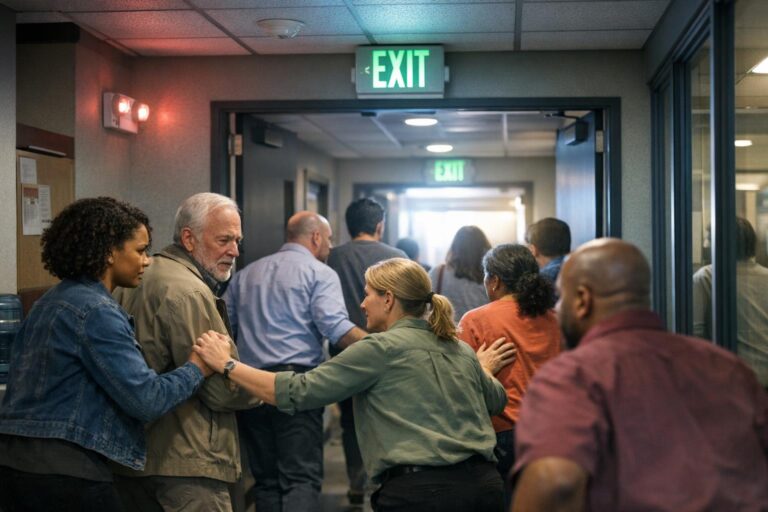
9. Emergency preparedness and business continuity
- Review response plans for fires, medical events, spills, and severe weather.
- Confirm that drills were held, learnings were documented, and updates were made.
- Check that emergency equipment is inspected and contact lists are current.
What most companies miss during safety program reviews
- Culture and perception: Many reviews never formally assess safety climate. Simple perception surveys or focus groups can uncover trust issues or a fear of reporting.
- Integration with operations: Safety is sometimes reviewed in isolation from scheduling and procurement. An integrated review examines how production targets and equipment choices influence safety.
- Follow-through and verification: Corrective actions are often logged but not checked for effectiveness. A review should test whether actions are verified in the field and adjusted if they fail.
- Use of data and leading indicators: Your review should check whether you are monitoring leading indicators (e.g., preventive maintenance completion) to guide priorities before incidents occur.
Building a stronger annual safety review process
- Define clear objectives aligned with your highest risks.
- Use multiple evidence sources: Documents, data, field observations, and worker input.
- Prioritize findings based on risk, not just compliance.
- Assign owners, deadlines, and resources for corrective actions.
- Revisit progress during the year, not only at the next annual review.
When you treat annual safety program reviews as an opportunity to learn and engage your people, you move from a reactive approach to a proactive system that reliably prevents harm.
Links (sources cited)
- OSHA Recommended Practices for Safety and Health Programs
- National Safety Council, “Work Injury Costs”